Super El Niño 2026: A Physician's Guide to Surviving Karachi's Extreme Heatwaves
I have witnessed the effects of human bodies giving up to heat. I was there at JPMC during the June 2015 tragedy - in the wards, at the triage stations - watching families bring in bodies that had gone silent before the ambulance arrived. The mortuary was overflowing. People were being rushed to the grave to free up cold storage. Over 1,200 people died in ten days, from heatstroke and dehydration, in a city of 20 million with hospitals that collapsed under the burden of a weather event no one treated as a medical emergency until it was too late.
This must never happen again. But the stage is being set for it again, right now, in 2026. The Pakistan Meteorological Department (PMD) has confirmed that El Niño is expected to develop this summer and may intensify into a Super El Niño by late August or September. PMD spokesperson Anjum Nazir Zaigham has stated plainly: "El Niño suppresses the summer monsoon in the subcontinent." No monsoon relief. No sea breeze. Just stagnant, humid, superheated air sitting over a concrete city with 10 to 18 hours of daily load shedding. The PMD’s own heatwave alert issued this week warns that southern Pakistan - including Karachi - faces mild heatwave conditions as early as April 29 to May 3, with temperatures potentially touching 52°C in the most heat-prone areas. That is not a weather forecast. That is a clinical emergency in slow motion.
I am a doctor who has provided medical advice to people during Karachi’s heatwaves for more than 6 years. What follows is what I would tell the family of a patient in my clinic right now. Read it that way.
Quick Recognition Table: Spot It Before It Kills
Print this. Put it on your fridge. Share it on your family WhatsApp group. The speed at which you identify these symptoms determines whether someone walks out of the ER or is carried in.
The Physical Symptom | The Clinical Reality | The Fatal Mistake |
Profuse sweating suddenly stops | Anhidrosis - the sweat glands have failed. Core temperature is now climbing unchecked. This is heatstroke, not heat exhaustion. | Thinking the patient has “cooled down” because they’ve stopped sweating. They have not. Call emergency services immediately. |
Extreme muscle cramps | Severe electrolyte depletion - sodium and potassium are critically low. The muscles are cramping because cellular hydration has collapsed. | Giving the victim plain water. This dilutes remaining electrolytes further, accelerating hyponatremia and potential seizures. |
Confusion or sudden irritability | Cerebral hyperthermia. The brain is being cooked. Altered mental status in a heat emergency is a neurological red flag, not agitation. | Dismissing confusion as stress or fatigue. A confused heatstroke victim needs the ER within 30 minutes - not rest and water. |
Dark amber urine or no urine | Renal hypoperfusion. The kidneys are already in distress. Dark urine is a body-wide SOS signal for severe intravascular dehydration. | Waiting for symptoms to worsen. Acute kidney injury from heatstroke can become irreversible within hours of this presentation. |
Rapid, weak pulse | Vasodilation and compensatory tachycardia. The cardiovascular system is trying - and failing - to maintain circulation as blood pools peripherally. | Lying the patient flat without shade, cooling, or electrolyte support. Supine positioning alone does nothing without active intervention. |
The Human Body vs. 50°C: What Actually Happens Inside You
1. The Wet-Bulb Threshold: Why Karachi’s Humidity Is the Real Killer
Many people consider heat as a measure of temperature. They are wrong. What matters to the human body is the wet-bulb temperature - a combined measure of heat and humidity that determines whether your sweat can actually evaporate. Evaporation is your body’s only meaningful cooling mechanism. When the air is already saturated with moisture, sweat cannot evaporate. It just sits on your skin, doing nothing, while your core temperature climbs.
Research published in Science Advances established that a wet-bulb temperature of 35°C represents the upper physiological limit for human survival - the threshold beyond which even a healthy adult resting in shade will experience fatal hyperthermia. NASA has confirmed that wet-bulb temperatures at or near 35°C have already been recorded in coastal subtropical locations - including Pakistan. Karachi’s coastal humidity, typically 60–80% in the mornings, can push the heat index far above 50°C even when the thermometer reads 45°C. On the peak day of the 2015 event, with recorded temperature of 44.8°C, the actual heat index reached 66°C. That is not a statistic. That is an oven.
What to do: Check the PMD real feel index every morning, not just the temperature. If the real-feel exceeds 45°C and you have vulnerable family members - elderly, children, anyone with cardiac or respiratory conditions - treat that day as a medical confinement order.
2. The Dehydration Illusion: You're Already 1 Litre Short Before You Feel Thirsty
This is something your body is actively hiding from you: thirst is a late-stage warning. By the time your mouth feels dry and your throat tightens, you have already lost 1 to 1.4 litres of body fluid. Research on hydration thresholds shows that the thirst mechanism only activates at approximately 2% body mass loss - roughly 1.4 litres for a 70 kg adult. By that point, thermoregulatory function is already impaired, cardiovascular strain is elevated, and cognitive performance is measurably declining.
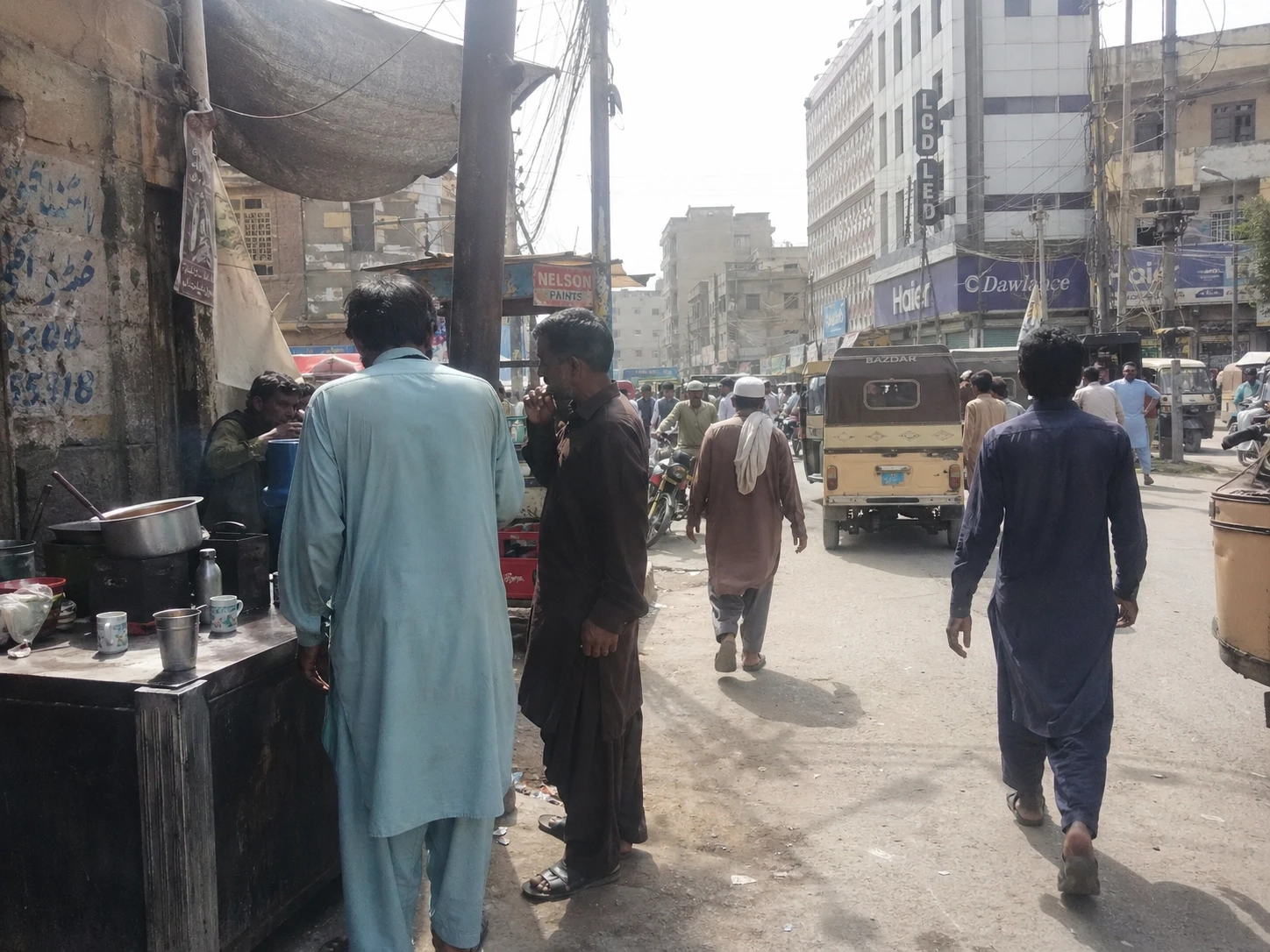
In Karachi heat, a person doing light outdoor activity sweats at rates that can reach 1–2 litres per hour. You are not keeping up. You are never keeping up. And during Ramadan - when millions observe dawn-to-dusk fasting under brutal temperatures - the dehydration accumulates silently across 15 hours, then hits like a wall.
What to do: If you are outdoors in heat above 35°C, drink before you feel thirsty. Set a timer. 200–250ml of ORS solution every 20–30 minutes is the baseline. Not tea. Not Pepsi. Not Rooh Afza.
3. Triage at Home: ORS or Nothing - Plain Water Will Make It Worse
The first sip of icy, heavily sugared Rooh Afza you take when you walk inside must stop there. High sugar loads impair rapid cellular hydration. The glucose spike drives insulin, shifts fluid, and does nothing for your sodium-potassium balance - which is exactly what a heat-exhausted body is haemorrhaging.
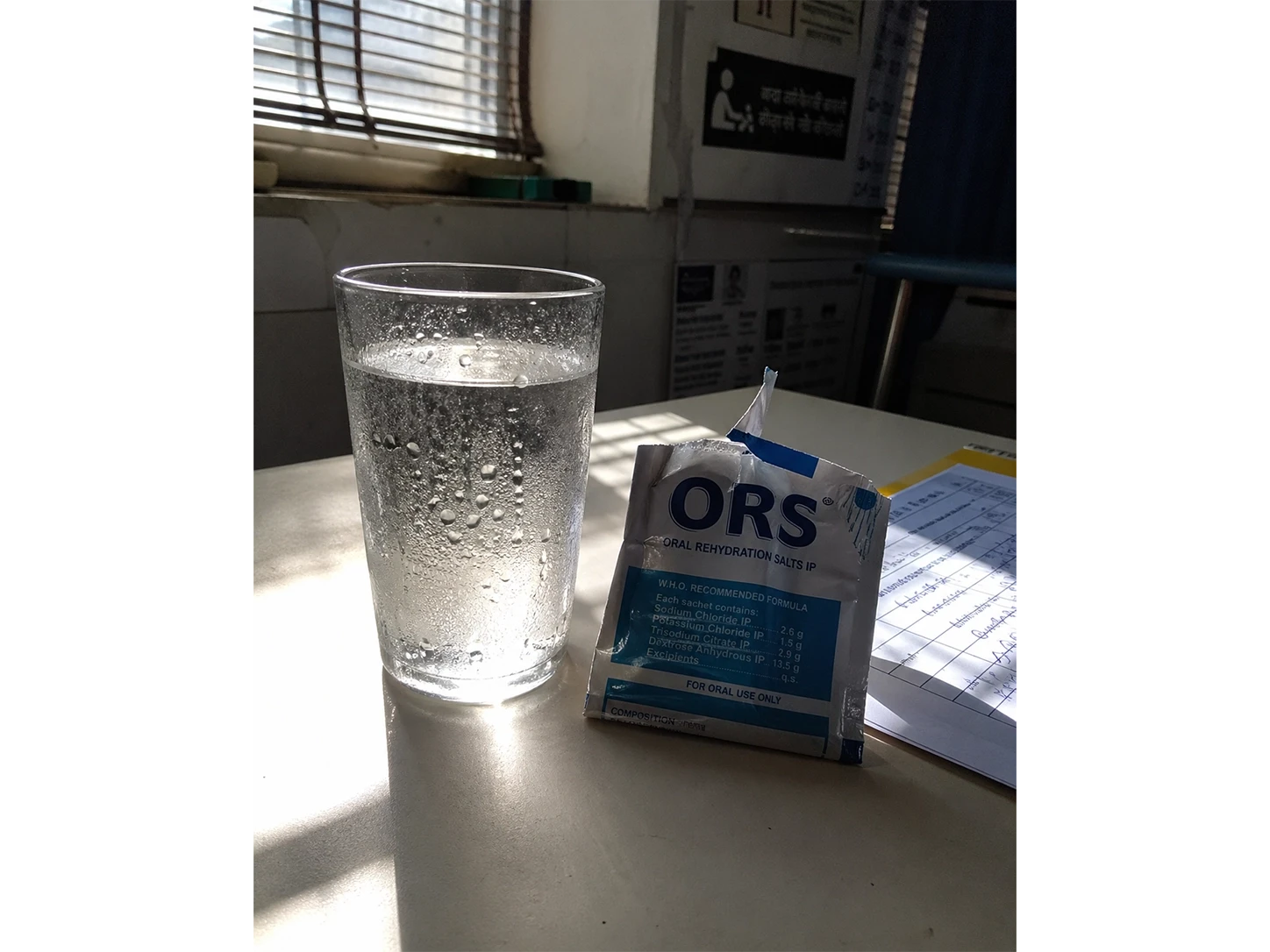
The danger of plain water in heat emergencies is called hyponatremia - dangerously low sodium levels caused by drinking large volumes of water without electrolytes. It presents as nausea, headache, confusion, and seizures. It looks exactly like worsening heatstroke. And it is caused by the very act of trying to hydrate incorrectly. WHO and UNICEF's ORS formulation - glucose, sodium, potassium, chloride in precise ratios - exists precisely because the gut can only absorb water efficiently when sodium is present to drive the transport mechanism.
By May, every Karachi home should have ORS sachets stockpiled. Dissolve one sachet in one litre of clean, cool water. Begin administering at the first sign of dizziness, cramps, or heavy sweating. Do not wait for full symptom onset. Seek medical advice immediately if symptoms do not improve within 30–60 minutes of oral rehydration.
4. The Core Cooling Protocol: What the ER Actually Does
Every year, well-meaning family members douse a collapsed heatstroke victim in buckets of freezing ice water. Every year, this causes problems.
The issue with extreme cold water immersion in an uncontrolled home setting is not merely discomfort - it is cutaneous vasoconstriction. Exposure to ice-cold water results in the peripheral blood vessels clamping shut, which traps heat inside the core rather than dissipating it through the skin. The body temperature may appear to stabilise on the surface, while internal organ temperature continues to rise. Clinical guidelines on cooling hyperthermia specify that the priority is evaporative and conductive cooling together - not thermal shock.
The ER-approved home protocol before the ambulance arrives:
Neck, armpits, groin: Apply cool, wet towels or ice packs wrapped in cloth to these three sites. Major blood vessels run close to the surface here. You are cooling the blood itself, not just the skin.
Fan the patient continuously while keeping the skin wet. Combine evaporation with airflow. This is the safest approximation of the clinical evaporative cooling method.
Do not submerge an unresponsive adult in a tub of ice water at home without medical supervision. Move them to the coolest available room, begin targeted cooling, and call for emergency transport.
Published emergency protocols are unambiguous: get core temperature below 39°C within 30 minutes of symptom recognition. Every 10-minute delay worsens neurological outcomes.
5. The Load-Shedding Survival Rule: When the Electricity Dies
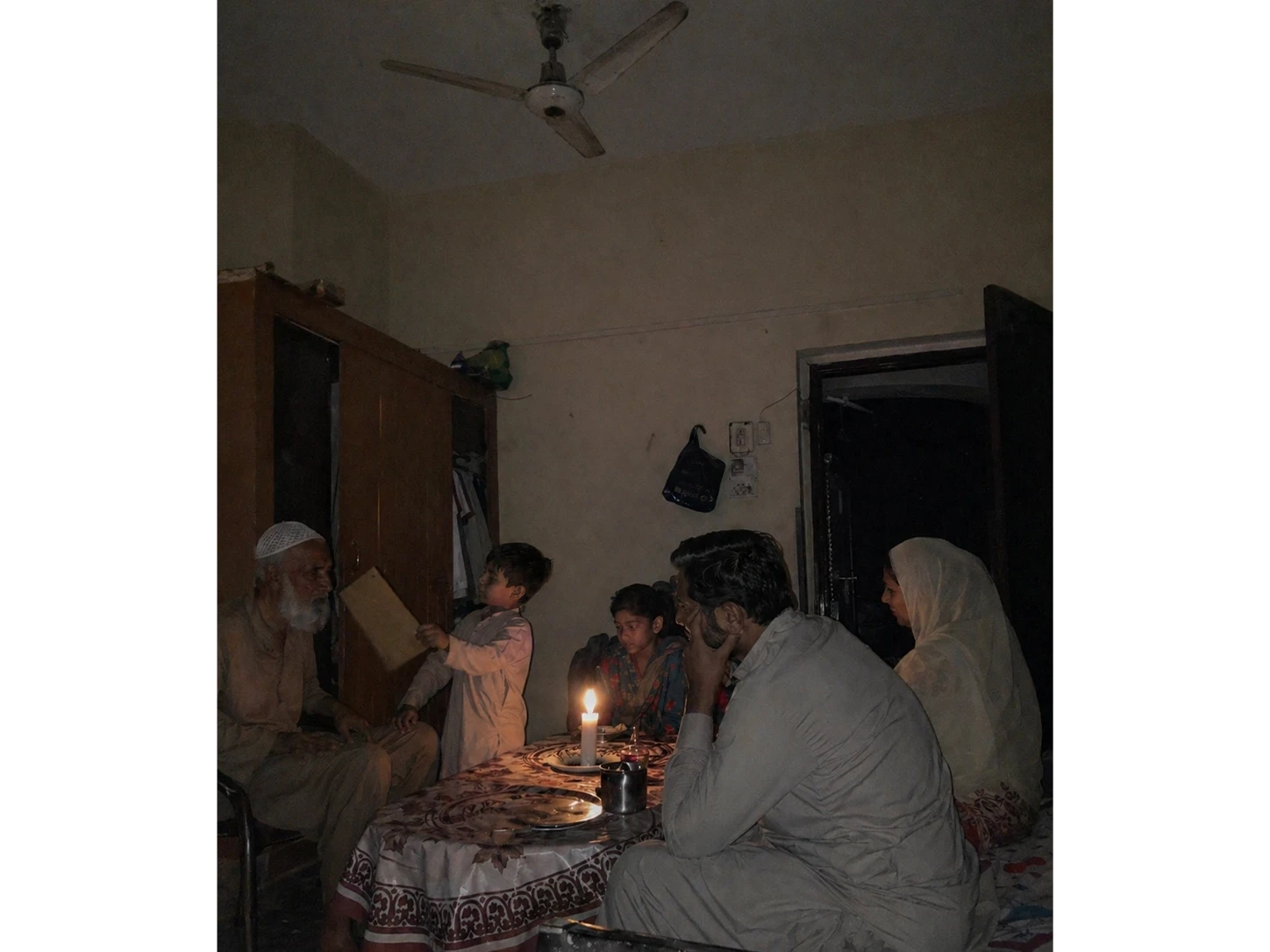
Here is the variable no other heatwave guide accounts for: Karachi’s power infrastructure. During June and July, K-Electric load shedding runs 10–18 hours daily in many areas. No fans. No AC. Concrete walls that absorbed heat all day radiating it back through the night. It was a central factor in the 2015 death toll, and nothing structural has changed since.
When the electricity goes, your cooling strategy must not depend on it:
Coolest room first: Identify the coolest room in your home - typically ground floor, north-facing, with cross-ventilation. Move elderly or unwell family members there by noon, before peak temperature.
Wet cotton sheets: Hang them in doorways or over windows. Evaporating water from fabric cools passing air. It is low-tech, medically sound, and requires zero electricity.
Battery-powered or rechargeable handheld fans: Basic, essential, life-saving. Particularly for infants and the elderly, who cannot thermoregulate effectively even in moderate heat.
Never seal a room: Stagnant hot air with no circulation is worse than hot air moving. Ventilation matters more than insulation during a heatwave.
Prioritize ORS during load shedding hours: The higher the ambient temperature, the faster fluid and electrolyte depletion accelerates - even at rest.
The Fatal Heatwave Mistakes Karachi Residents Keep Making
Relying on Pepsi, Fanta, or energy drinks for hydration. Carbonated, high-sugar beverages have a diuretic effect and provide no meaningful electrolyte replacement. They make you feel hydrated. They are not.
Ignoring a throbbing headache as “just tiredness.” An occipital headache - dull, pounding, sitting at the base of the skull - during heat exposure is early heat exhaustion. It means cerebral blood flow is already compromised. This is not a paracetamol situation. This is a rest-and-ORS-immediately situation. If it does not resolve in 30 minutes, go to the ER.
Dousing a severe heatstroke victim in a bucket of ice water. Dangerous at home. The vasoconstriction response traps heat centrally. Use the targeted cooling protocol described above and get them to emergency care.
Fasting without a hydration plan. During fasting in peak heat, the window between Iftar and Sehri must include aggressive, structured rehydration. Two glasses of plain water is not enough. ORS and potassium-rich foods - bananas, dates, coconut water - must be part of every Iftar table.
Waiting for a 'real' emergency before calling for help. By the time a heatstroke patient becomes unresponsive, you have already lost significant intervention time. Altered mental status, cessation of sweating, and a temperature above 40°C are absolute emergency criteria. Do not wait.
Karachi 2026 Heatwave FAQs
How can I prepare for the 2026 extreme heatwaves in Karachi?
Start hydrating proactively today, before temperatures peak. Baseline ORS intake - one sachet daily - prevents the gradual fluid deficit that accumulates unnoticed over hot weeks. If you do not have access to air conditioning, identify a public cool space: a bank, a large mosque, or a shopping mall where you can spend midday hours. The PMD is updating its heatwave alerts in real time - check their forecasts every morning from May through September.
What are the signs of a deadly heatstroke versus normal sweating?
The single most critical differentiator is anhidrosis - the sudden cessation of sweating. Normal heat response involves profuse sweating and flushed skin. Heatstroke presents as hot, dry skin - the sweat glands have shut down. Combine that with altered mental state - confusion, aggression, slurred speech, or unresponsiveness - and you have a life-threatening emergency. Published heatstroke emergency protocols classify any core temperature above 40°C with neurological involvement as classical heatstroke requiring immediate hospital-level cooling. Call emergency services. Do not drive the patient yourself if they are deteriorating.
Does the PMD real-feel index actually matter for my health?
Yes - more than the raw temperature reading. The PMD real-feel index accounts for humidity, wind speed, and solar radiation, all of which directly affect how efficiently your cardiovascular system can offload body heat. Peer-reviewed research in Nature Communications shows that the standard 35°C wet-bulb survivability threshold is actually underestimated - older adults may hit critical physiological limits 7–13°C below that threshold. When the PMD real-feel index reads 50°C, a 65-year-old with uncontrolled hypertension is already in a danger zone that many younger physicians underestimate.
The 2015 Echo: Why 2026 Requires Medical Vigilance
The peer-reviewed record of the 2015 Karachi heatwave documents what most Karachi residents already know in their bodies: 1,200 deaths in 10 days, hospital morgues overflowing, 65,000 heatstroke patients treated at city hospitals in a single week. Temperatures reached 44.8°C on the thermometer. The heat index - factoring in the coastal humidity - was closer to 66°C. And critically, 10 to 18 hours of simultaneous load shedding turned the city’s concrete housing into a slow-cook environment from which the most vulnerable residents had no escape.
Karachi’s urban heat island effect has worsened since 2015. More concrete. More density. Fewer trees. The city absorbs solar radiation all day and releases it through the night, preventing the nocturnal cooling that might otherwise offer some physiological recovery. El Niño suppresses the monsoon - the single seasonal event that historically breaks Karachi’s summer heat cycle. Without it, the heat does not build and break. It builds. And builds. And the vulnerable die in the places they thought were safe: at home, in their beds, with no fan running and no ORS in the kitchen.
A Super El Niño 2026 is not a weather inconvenience. It is a public health crisis with a predictable, preventable casualty profile. The good news compared to 2015 is that we are expecting it. We have the clinical knowledge to implement heatstroke emergency protocols at the household level. We have ORS. We have thermometers. We have phones that can call for help.
We just cannot make the mistake of thinking it will not happen to us - that it is something that happens to other families, in other neighbourhoods, in other years.
It happened to 65,000 Karachi families in seven days in 2015. Plan accordingly.
DISCLAIMER: This article is for preventative educational purposes only and does not constitute individual medical advice. If you or a family member are experiencing symptoms of heatstroke - including cessation of sweating, confusion, or loss of consciousness - seek emergency medical care immediately.
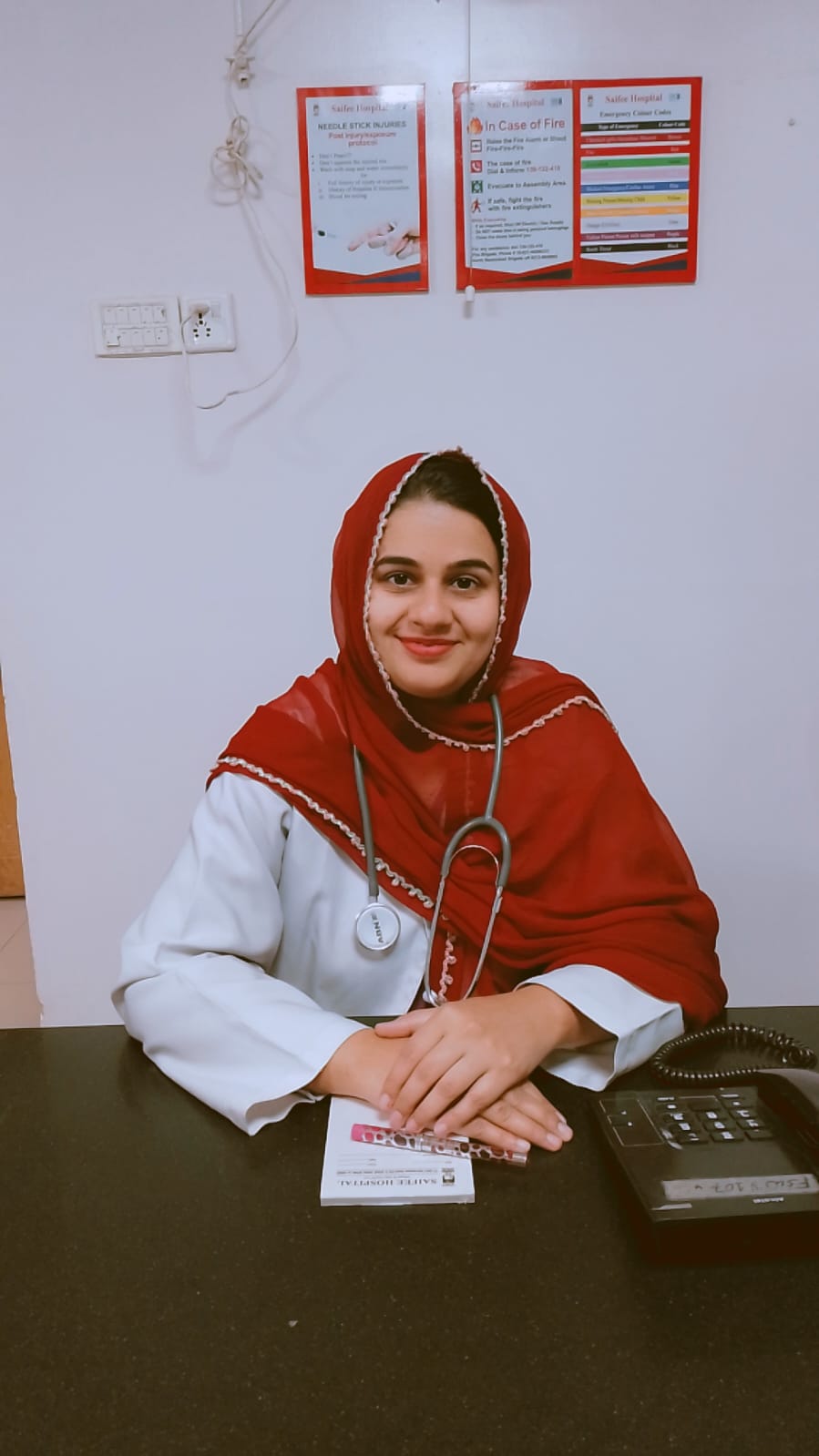
Dr. Munazza MBBS
A General Physician (MBBS) with 5+ years of experience, currently working as an RMO at Saifee Hospital, focused on diagnosing, treating, and managing common health conditions.