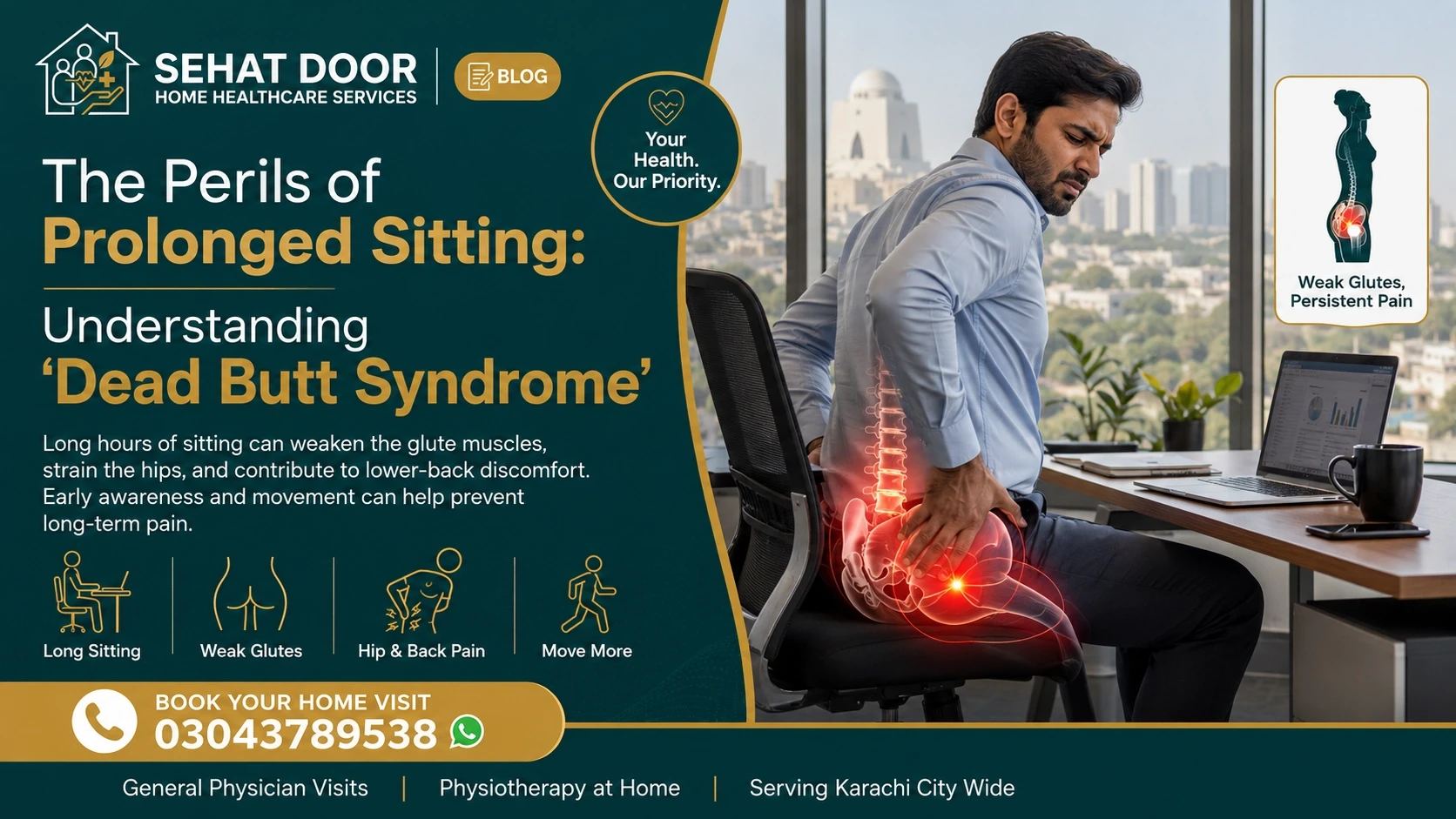
You finish a Zoom call at 11 PM. You have been seated since 9 AM - and if you count two hours of bumper-to-bumper traffic on Shahrah-e-Faisal before your workday started, your gluteus maximus - the largest and most powerful muscle in the human body - has not contracted meaningfully for close to 14 hours. That is not a minor inconvenience. That is a neuromuscular shutdown in progress.
As a DPT visiting homes across Karachi’s remote workforce, I see the same clinical picture week after week. Software developers in Gulshan. Freelancers in DHA. Data analysts in Clifton. A stiff, unresponsive gluteus maximus, shortened hip flexors, and a lumbar spine absorbing load it was never built for. Research published in BMC Public Health found that office workers sitting more than four hours daily are 2.51 times more likely to develop musculoskeletal disorders - and the lower back is where that damage shows up first.
They all ask the same question: “Why does my back hurt when I’ve been resting all day?” Because sitting is the opposite of rest for your musculoskeletal system. The clinical term for what prolonged sitting does to your backside is gluteal amnesia. The colloquial term is dead butt syndrome. It is far more serious than it sounds, and it sits at the root of most lower back pain in desk-bound professionals.
What Is Dead Butt Syndrome?
Dead butt syndrome - medically known as gluteal amnesia - is a condition where the gluteal muscles progressively lose the ability to fire and activate properly. When you sit for extended periods, the glutes are compressed and held in a passive, lengthened state. Over time, the brain reduces the neural signal it sends to contract them. The muscle is still there. But the connection weakens dramatically.
This is not a fitness problem. It is a motor pattern problem. Global sedentary behaviour data published in PMC shows adults worldwide now average 6.4 hours of sitting per day. Add Karachi’s commute culture on top of an 8-hour workday and that figure climbs significantly. The glutes, starved of activation for that long, begin to “forget” how to do their job. That is not a metaphor. That is a measurable loss of neuromuscular drive.
How Do You Know If You Have It?
These are the four most common signs. Most patients I see in home visits have at least two of them.
Symptom | What It Actually Means | Mistake Most People Make |
Deep ache at the belt line when standing up | Lower back muscles are doing the glutes’ job. They are exhausted. | Taking a painkiller and sitting straight back down. |
Hamstrings always tight no matter how much you stretch | They are compensating for inactive glutes. Stretching makes them worse. | Stretching the hamstrings harder, which increases the problem. |
Hip clicking or snapping while walking | Smaller hip muscles are overworking as glute substitutes. | Foam rolling the IT band without fixing the root cause. |
Losing balance on one leg, heavy legs on stairs | Pelvic instability from absent glute support. | Adding more cardio without addressing the neuromuscular gap. |
Why Sitting Causes This - The Biomechanical Chain Reaction
1: Your Hip Flexors Shorten and Tighten
Sitting holds the muscles at the front of your hips - the hip flexors - in a shortened, bent position for hours at a time. The body adapts to whatever position you force it into most often. Over weeks and months, these muscles shorten permanently. You feel this as a deep pinching sensation at the front of your hips that never fully goes away, no matter how many stretches you do.
2: Tight Hip Flexors Switch the Glutes Off
Through a neurological process called reciprocal inhibition, when one muscle stays chronically contracted, the nervous system sends an inhibitory signal to the opposing muscle to stop firing. Your hip flexors are at the front of the hip. Your glutes are at the back. When the hip flexors are perpetually short and tight, they are neurologically suppressing your glutes. Research on gluteal reciprocal inhibition confirms this: it is not simply weakness. Your nervous system is actively instructing your glutes not to activate.
3: Your Lower Back Is Left Doing All the Work
The glutes stabilise your pelvis and drive hip movement during walking, standing, and climbing stairs. When they switch off, the lower back muscles step in as an emergency substitute. These muscles were never designed for that role. Studies in the International Journal of Environmental Research and Public Health show clinically meaningful low back discomfort begins after just two hours of continuous sitting. After eight or nine hours, those lower back muscles are chronically fatigued. That is the dull, constant ache right at your belt line.
4: The Pelvis Tilts Forward and Compresses Your Discs
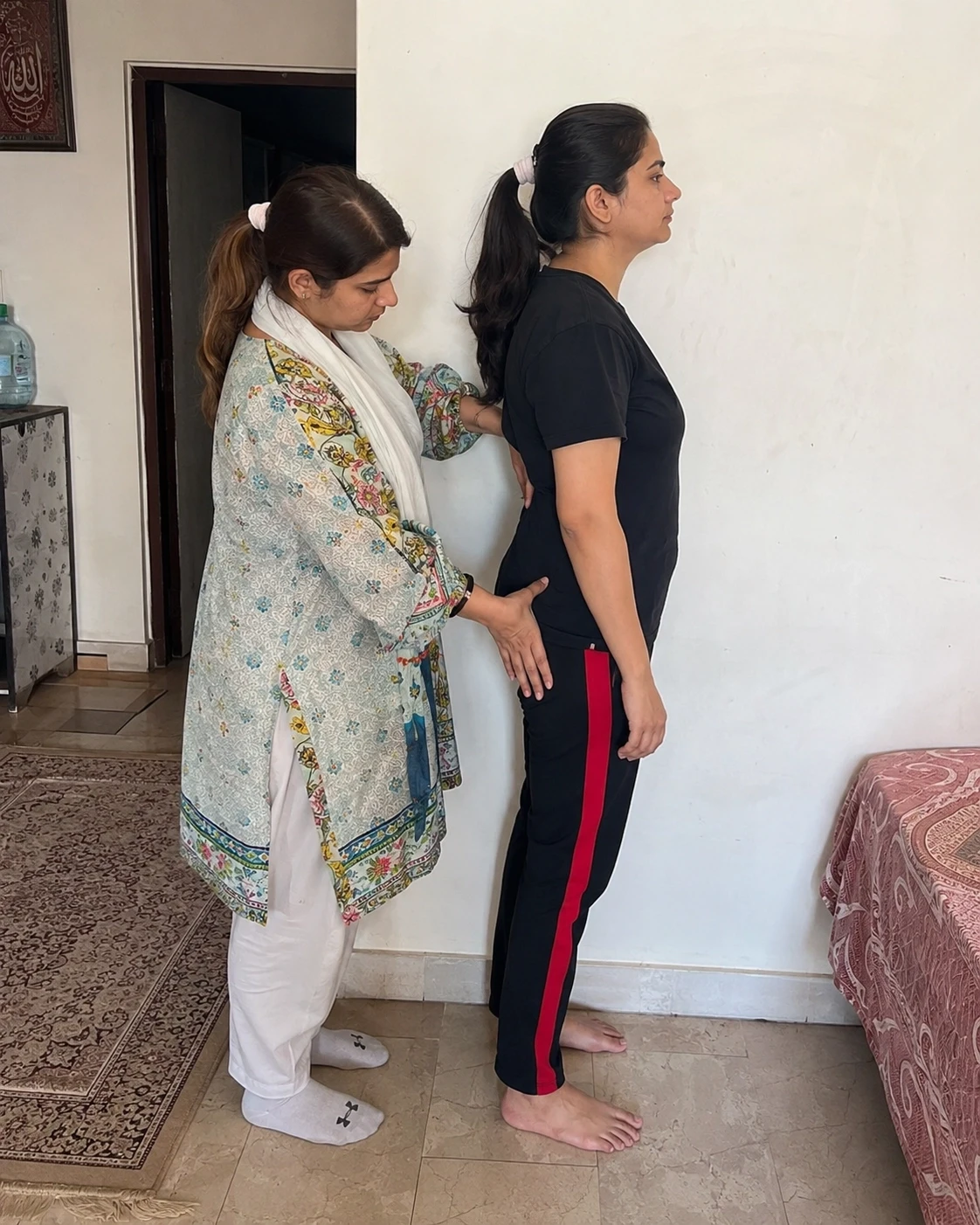
Without strong glutes pulling the pelvis back and under, and with tight hip flexors pulling it forward, the pelvis tips into anterior pelvic tilt. The lower back arches excessively. The discs between the lower vertebrae - particularly L4-L5 and L5-S1 - are now being unevenly compressed with every single movement. Left long enough, dead butt syndrome becomes a disc bulge. This is not a worst-case scenario. It is a predictable mechanical outcome.
The Mistakes That Make It Worse
Stop stretching your lower back to relieve the pain. Your lower back does not need more flexibility right now - it needs stability. Bringing your knees to your chest gives temporary relief while doing nothing about the root cause. The glutes need to be activated first.
Stop blaming your chair. Thousands of rupees spent on memory foam cushions or ergonomic chairs is not the answer. A softer surface just means you are more comfortably compressing your glutes for longer. You do not need a better seat. You need to get off that seat regularly and use your glutes.
Do not keep stretching tight hamstrings. If your hamstrings are always tight, it is almost certainly because they are compensating for dormant glutes. Repeatedly stretching them adds neural irritation to an already overloaded muscle. The tension will not release until the glutes are doing their share of the work again.
Do not keep your wallet or phone in your back pocket while sitting. Even a small object under one sit bone creates an uneven pelvic tilt. Over time this compresses the piriformis muscle on one side, creating a deep buttock ache that mimics sciatica and is frequently misdiagnosed.
Is It Dead Butt Syndrome, Sciatica, or a Herniated Disc?
This is the most important clinical distinction before you do anything else.
Dead butt syndrome causes a deep, dull ache in the buttock, SI joint, and lower back. It gets worse after sitting and better with movement. Pain stays above the knee.
Sciatica involves sharp, burning, or electric pain that travels from the lower back through the buttock and shoots below the knee - into the calf, foot, or toes. There may be numbness or tingling. This indicates nerve compression or irritation, not just gluteal weakness.
A herniated disc typically produces pain following a specific nerve distribution, may include muscle weakness in the leg, and is often triggered by bending forward or lifting.
Frequently Asked Questions
Will walking 10,000 steps a day fix dead butt syndrome?
Not on its own. If your glutes are already inhibited, walking recruits the hamstrings and smaller hip muscles instead. You can walk for hours and not meaningfully activate the glutes at all. Walking helps reduce sedentary time, but you need targeted gluteal reactivation treatment under clinical supervision to fix the neuromuscular pattern.
Why do my hamstrings cramp when I try a glute bridge?
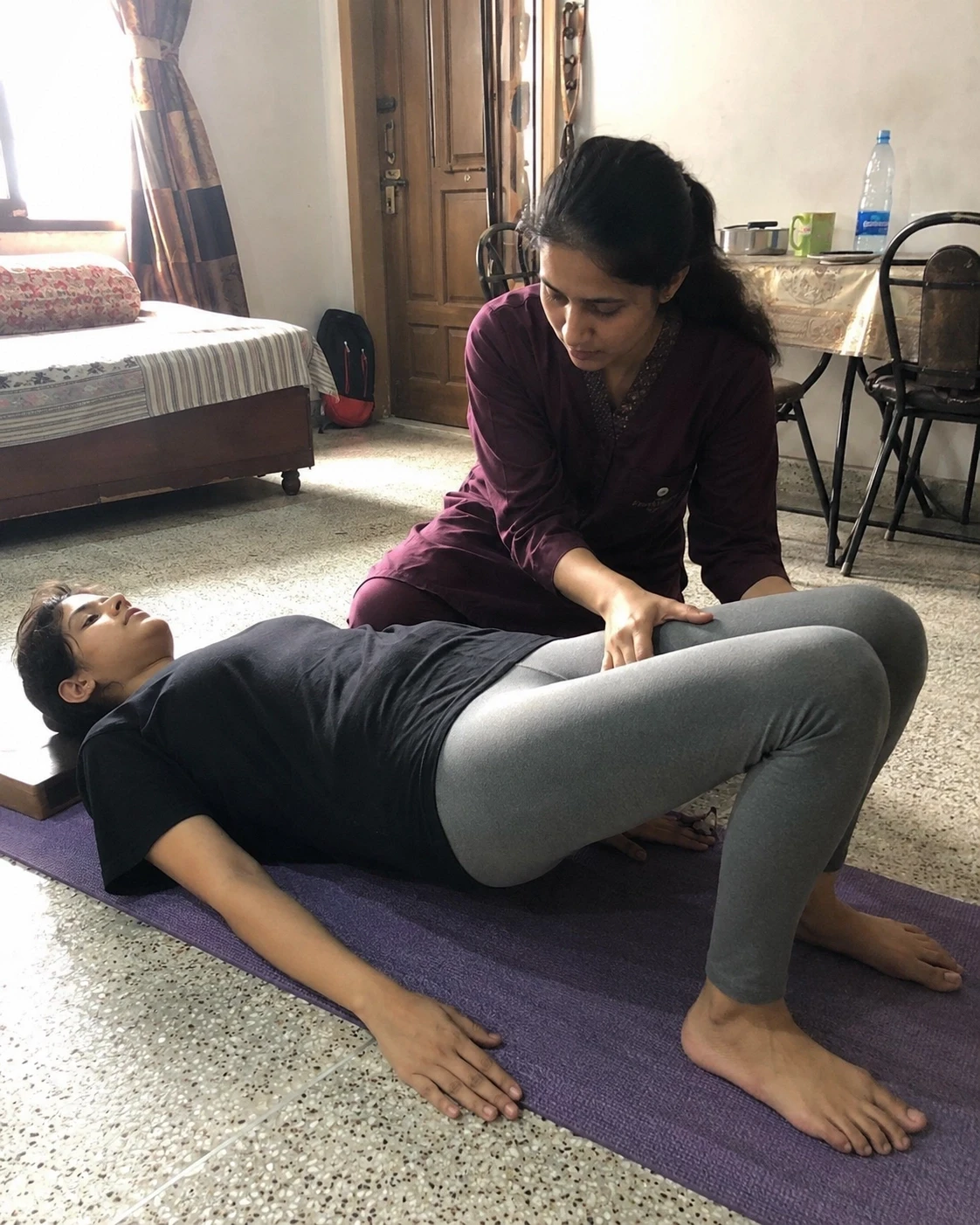
Because your glutes are not initiating the movement. Your hamstrings are picking up the slack. The cramp is a hamstring attempting to carry load it is not built for. Start with basic flat-lying isometric glute squeezes - squeeze and hold for 10 seconds with no hip movement - to re-establish the brain-to-glute connection before attempting any bridging exercise.
What can I do at my desk right now?
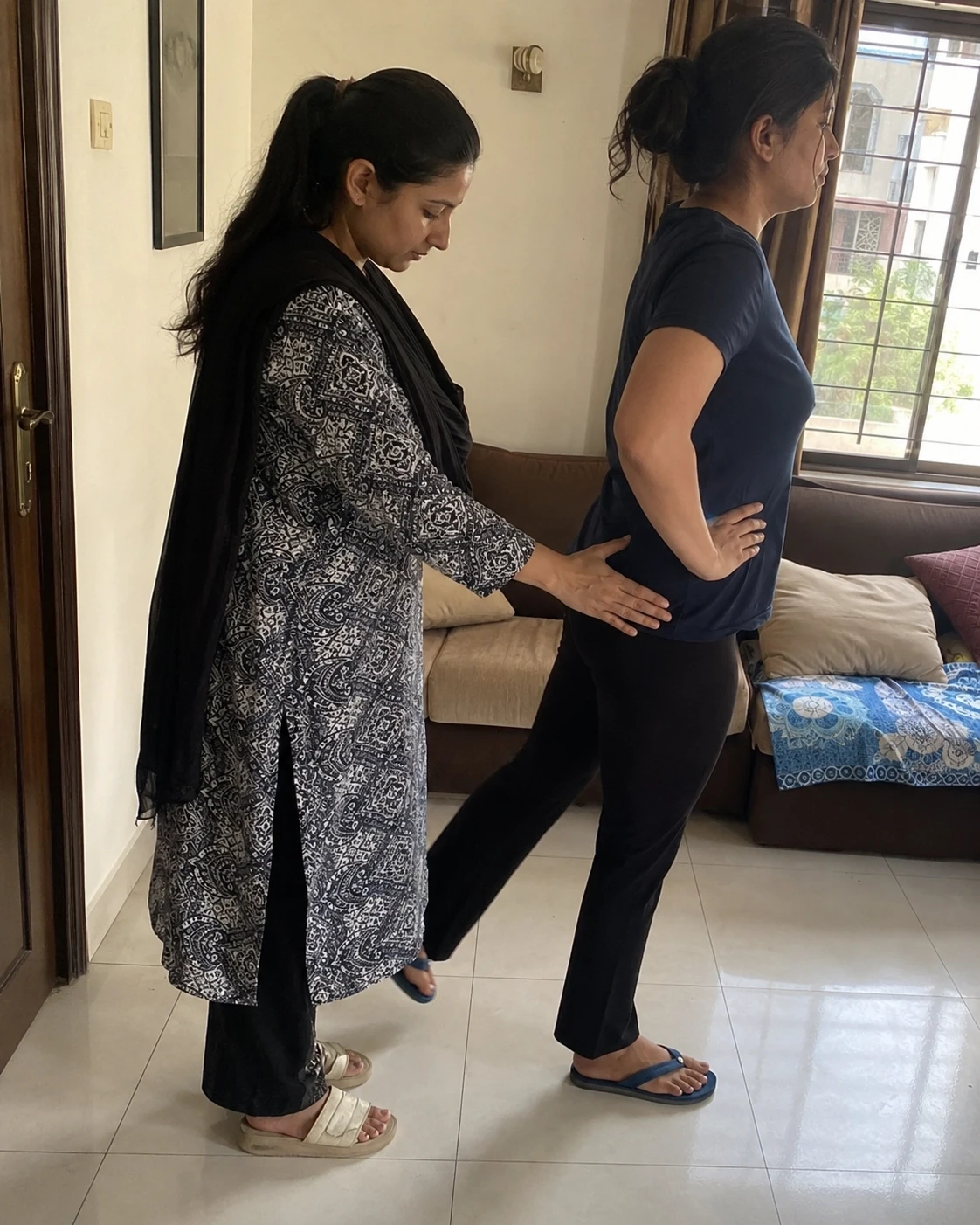
Stand up. Place both hands on your desk, lean slightly forward, and drive one heel straight back while squeezing the glute on that side. Hold for 8–10 seconds. Alternate sides. Do this every 30 to 45 minutes. It takes 90 seconds and begins to reverse the inhibition pattern building with every hour you remain seated.
How long does recovery take with physiotherapy?
Most patients begin feeling a reliable glute contraction within four to six supervised sessions once hip flexor tightness is also addressed. Full recovery - where the glutes fire automatically without conscious effort - typically takes eight to twelve weeks of consistent, progressive work. The longer the problem has been present, the longer retraining takes.
Can dead butt syndrome cause knee pain?
Yes. Without gluteal control, the thigh bone internally rotates during weight-bearing. The kneecap is pulled off-track, producing patellofemoral pain syndrome - the ache behind the kneecap that worsens on stairs or after sitting. If you have unexplained knee pain and spend most of your day seated, have your glutes assessed before your knee.
Does crossing my legs make this worse?
Yes. Crossing your legs tilts the pelvis to one side and chronically compresses the piriformis on the dominant side. Done daily over months, it creates measurable asymmetry in hip and lower back loading. Most patients with one-sided hip or lower back pain have a consistent leg-crossing habit. Both feet flat on the floor is a clinical correction, not just a posture tip.
I do squats at the gym. Why do I still have this?
Because if your hip flexors are still tight and reciprocal inhibition is still active, your quads and smaller hip muscles are doing most of the squat work - not your glutes. You can do 200 squats a day and still have gluteal amnesia. The neuromuscular sequencing has to be corrected first. Only then does loading those patterns in the gym build what you think it is building.
The gluteus maximus is not optional anatomy. It is the mechanical foundation on which your entire posterior chain stands. When it shuts down, the spine pays. The hamstrings pay. The knees pay. A decade of desk work without deliberate glute reactivation does not just produce discomfort - it produces structural damage that compounds quietly and permanently. The difference between a reversible neuromuscular pattern and an actual disc herniation is often nothing more than time.

Dr. Aleena PT
A Physiotherapy Doctor (DPT) from Jinnah Sindh Medical University, focused on musculoskeletal rehabilitation, evidence-based patient care, pain management, mobility improvement, and recovery support.