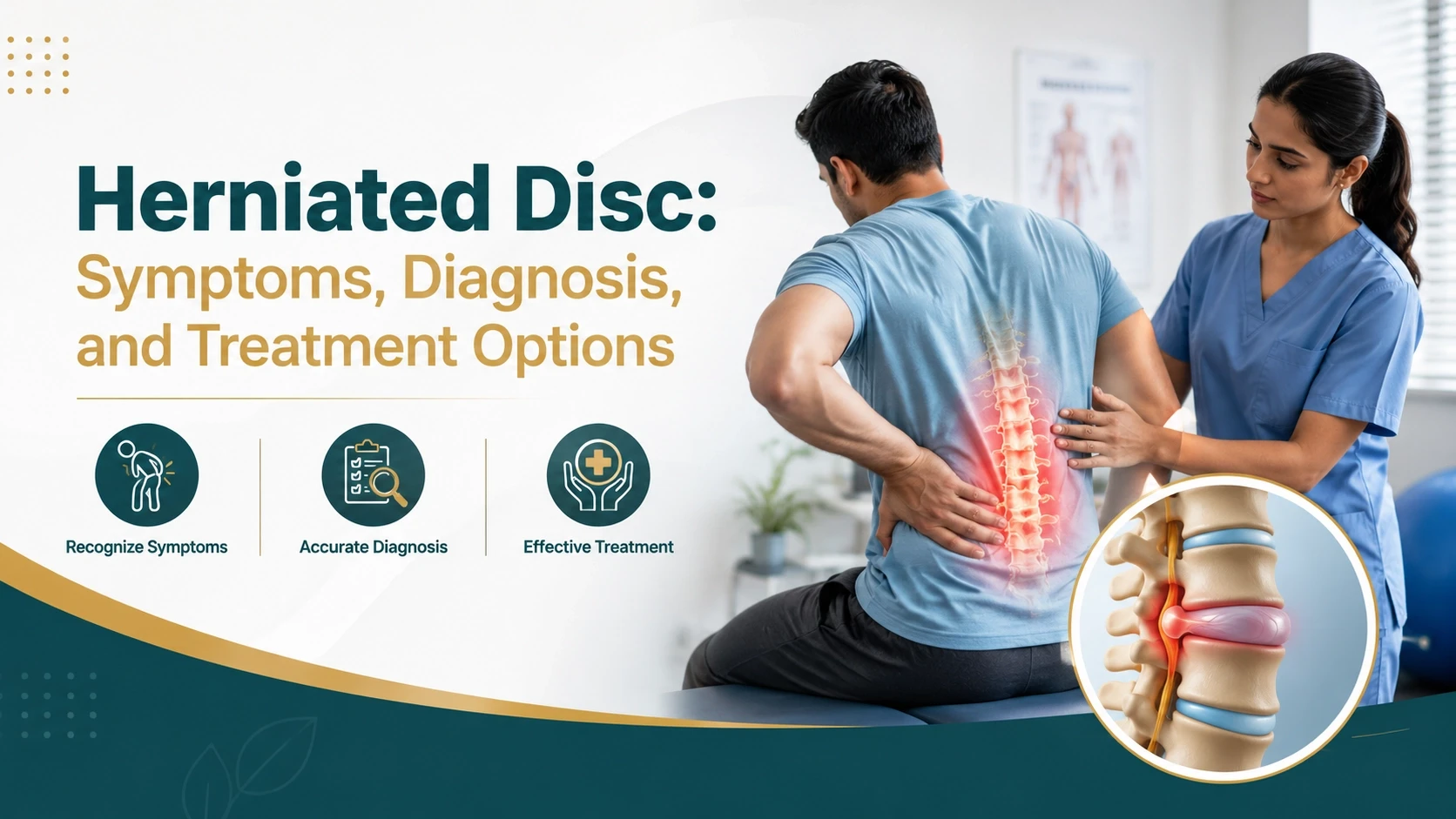
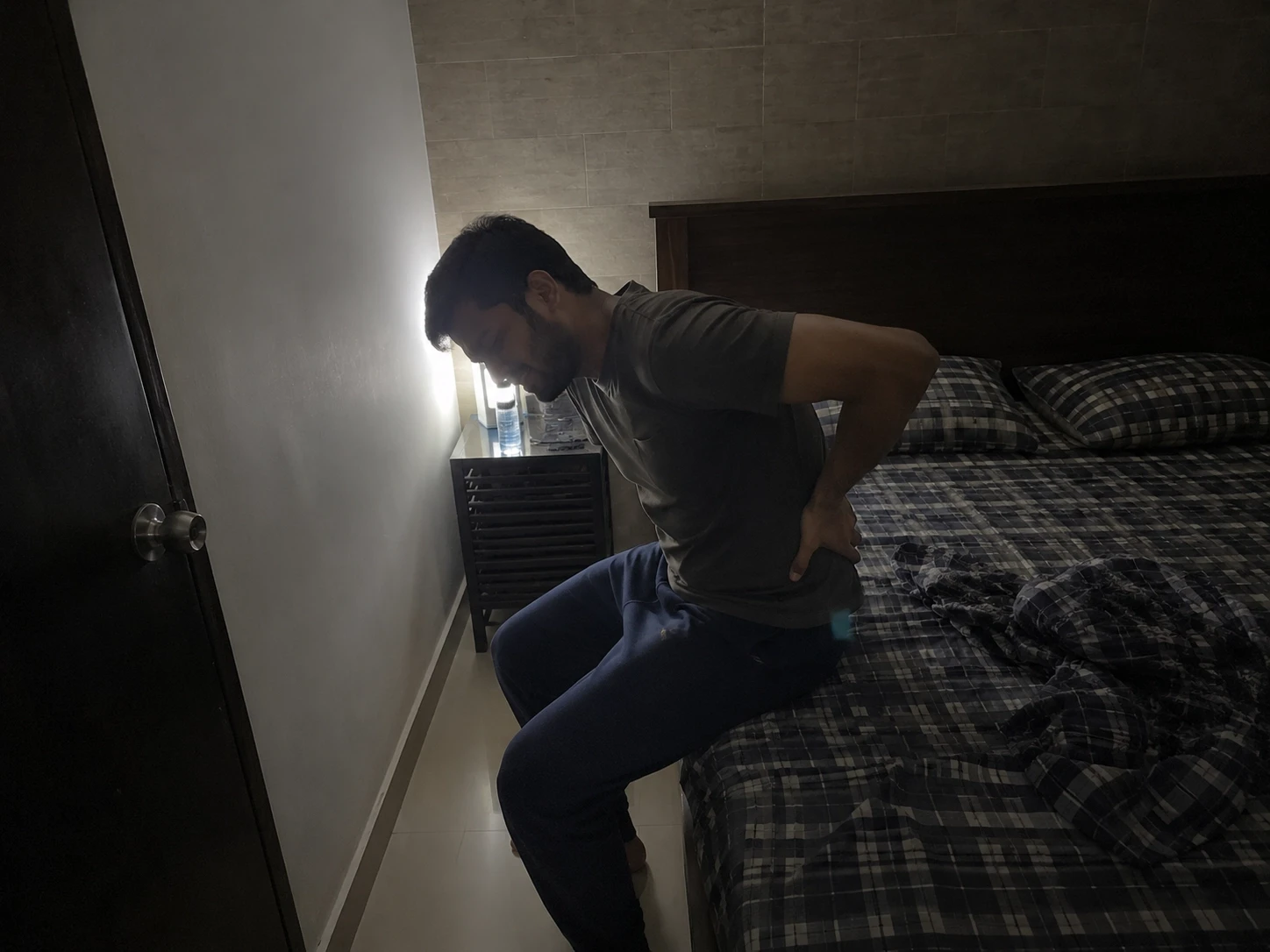
You bend forward to pick up a water canister, feel a deep pop in your lower back, and then it hits - a bolt of lightning shooting from your left hip all the way down to your calf. You straighten up very slowly. The pain is still there. You sit down on the edge of the bed, and the sitting makes it worse. By 2 am you're on your phone searching 'slipped disc symptoms' and convincing yourself you'll never be able to work again.
That moment - the combination of physical pain, fear, and 2 am Google rabbit holes - is something I've seen play out with dozens of patients. A friend of mine, a software developer who used to sit 13–15 hours a day on a broken office chair in a DHA flat, came to me barely able to put his socks on. His MRI showed an L4-L5 herniation pressing on the nerve root. He was convinced he needed surgery. What he actually needed was six weeks of structured physiotherapy, a few posture adjustments, and someone to explain what was actually happening inside his spine.
Back pain is one of the most common reasons people seek medical care globally. According to a December 2025 StatPearls update, mechanical and disc-related disorders account for the majority of back pain presentations across all age groups, with younger adults - the 30–50 bracket - at peak risk for lumbar disc herniation. A 2025 systematic review in the European Spine Journal confirmed a point prevalence of around 5% for symptomatic disc herniation in adults over 30. The better news: a 2025 review of treatment guidelines across multiple guideline bodies found that more than 85% of people with acute herniated disc and radicular leg pain improve with conservative management over time - without surgery. What this article will give you is a clear, honest picture of what's actually happening in your spine, how clinicians diagnose it, and what your realistic treatment options are.
Is This a Herniated Disc? Quick Reference Table
Not every back and leg pain is a disc herniation, and not every disc herniation needs the same response. Use this table as a first filter - it is not a diagnostic tool.
What You're Feeling | Herniated Disc 'Fit'? | What To Do Next |
Low back pain with sharp, electric pain shooting down one leg, sometimes to the foot, worse with coughing or sneezing or bending forward | Fits the classic pattern of lumbar disc herniation with nerve root irritation (sciatica). Other causes are also possible. | Book a physiotherapy or doctor assessment. Don't panic, but don't ignore pain that lasts more than two weeks or affects your ability to walk. |
Only low back pain, no leg pain - mostly aching, stiff, worse after sitting or in the morning | May be mechanical low back pain; a disc can be involved but nerve root compression is less likely. | Start conservative management. See a physiotherapist or doctor if it hasn't improved in two to three weeks, or sooner if it's severe. |
New difficulty passing urine, loss of bladder or bowel control, numbness around the groin or inner thighs (saddle area), or sudden severe weakness in both legs | Possible cauda equina syndrome - a spinal emergency. This is not a wait-and-see situation. | Stop reading and go to an emergency department immediately. Time to surgery matters with this condition. |
Old MRI report says 'disc bulge' but current pain is mild or you feel mostly fine | Many disc changes on MRI are incidental findings in people without significant symptoms. | Do not catastrophize a scan report. Focus on current symptoms and function with a PT or doctor, not old scan words. |
What a Herniated Disc Really Is
'Slipped Disc' vs What Actually Happens
The term 'slipped disc' is everywhere, and it makes the spine sound far more fragile than it is. Nothing actually slips. Your intervertebral disc - the cushion sitting between two vertebrae - has two parts: a tough outer ring called the annulus fibrosus, and a soft, gel-like centre called the nucleus pulposus. Think of it like a jam doughnut. When enough pressure builds up through sustained sitting, poor loading mechanics, or a sudden awkward movement, the outer ring can develop a crack or weak point. The inner gel pushes through - this is a herniation. If it merely pushes outward without breaking through, it's more accurately a bulge or protrusion.
The disc itself doesn't have a great nerve supply, so the disc alone causes only deep, vague back pain. The real problem begins when the herniated material pushes against a nearby nerve root as it exits the spinal canal. That's when you get the electric, shooting, one-sided leg pain - what clinicians call radiculopathy, and what most people know as sciatica. Roughly 95% of lumbar disc herniations occur at L4-L5 or L5-S1 - the two lowest discs in the spine - because these levels carry the most load and have the most movement.
Here's the most important thing to understand: a disc change on an MRI does not automatically mean pain, disability, or surgery. Studies have consistently found that a significant proportion of people with disc bulges or herniations visible on MRI have no pain at all. The scan finding and the clinical problem are not always the same thing. This matters enormously when your doctor tells you there's 'a disc bulge at L5-S1' and your brain immediately fills in the worst-case scenario.
Typical Symptoms: Back Pain, Sciatica, and When to Worry
The classic pattern of lumbar disc herniation is hard to miss once you know it. One-sided back pain that travels down the buttock, into the thigh, and sometimes all the way to the calf or foot. The pain is often described as burning, electric, or like a hot wire running down the leg. It typically worsens when you sit, bend forward, cough, or sneeze - because all of these actions increase pressure inside the disc and tug on the affected nerve root. Standing and walking are usually more tolerable. Lying on your side with a pillow between your knees often brings some relief.
Beyond pain, nerve root compression causes other symptoms too. Numbness or tingling in a specific part of the leg or foot - the exact location helps a physiotherapist or doctor work out which nerve level is involved. L4 radiculopathy tends to cause pain and numbness in the front of the thigh and inner shin. L5 involvement sends symptoms to the outer calf, top of the foot, and big toe. S1 compression - the most common - causes pain down the back of the thigh and calf, with numbness in the outer foot and heel. If the foot feels heavy, or you find yourself tripping because you can't lift the front of your foot properly (foot drop), that points to significant L4-L5 nerve involvement and warrants urgent assessment.
The 'can't put socks on' test is real. If bending forward to reach your feet sends a jolt of leg pain, that's the stretched nerve responding to tension. The fear of sneezing or coughing is real too - that sudden spike in spinal pressure briefly worsens nerve root irritation enough to take your breath away. None of this means permanent damage. But it does mean the nerve is under enough pressure to need proper management, not just painkillers and bed rest.
Red Flags: When a Herniated Disc Becomes an Emergency
Most herniated discs are painful and limiting, but not dangerous in the immediate, life-altering sense. Cauda equina syndrome (CES) is the exception. This is a condition where a large central disc herniation compresses the bundle of nerve roots at the base of the spinal canal - the cauda equina - and if not decompressed surgically within hours, can result in permanent paralysis of the bladder, bowel, and lower limbs.
The red flags for cauda equina syndrome that require same-day emergency evaluation are:
New difficulty passing urine - feeling unable to initiate urination, or a sudden change in how your bladder works
Urinary or faecal incontinence - losing control of bladder or bowel function without warning
Saddle anaesthesia - numbness or reduced sensation in the inner thighs, groin, perineum, or genitals (the area that would touch a saddle)
Rapidly progressive leg weakness - legs giving way or becoming noticeably weaker over hours to days
Bilateral sciatica - electric pain running down both legs simultaneously
A 2025 British Journal of General Practice review on updated national CES guidelines confirms that even the suspicion of these symptoms - in the absence of confirmed objective signs - is now considered sufficient grounds for emergency referral and same-day MRI. If you are reading this and ticking any of the above boxes, stop reading and go to an emergency department now. This is genuinely time-critical. Do not call a physiotherapist for this. Do not 'wait and see.' If there is any doubt, the A&E waiting room is the right place to resolve that doubt.
How Doctors and Physiotherapists Diagnose a Herniated Disc
The first thing most clinicians do is take a careful history. Where is the pain? Does it go down one leg or both? What makes it better or worse? Any changes to bladder or bowel function? Any recent trauma? These answers alone let an experienced PT or doctor build a strong clinical picture before touching you.
Physical examination adds crucial detail. The straight leg raise (SLR) test - lifting your leg while lying flat - stretches the sciatic nerve. If this reproduces your leg pain at 30–70 degrees, it's a significant positive sign for nerve root involvement. The slump test does something similar in a seated position. Clinicians also check muscle strength at specific levels - can you stand on your heels? On your toes? Is the knee jerk or ankle jerk reflex reduced? Weakness of specific muscle groups and absent reflexes at specific levels point directly to which disc is causing the problem.
Current guidance from StatPearls (September 2025) is clear: imaging is not indicated in patients without red flag signs unless symptoms persist for six weeks, and MRI is the imaging of choice when it is warranted. This matters for Karachi patients who are already worried about costs. You do not need to spend money on an MRI on day one. If your symptoms are consistent with a herniated disc and there are no red flags, the right first step is a clinical assessment and a structured conservative care plan - not rushing to get a scan. MRI becomes relevant when symptoms haven't improved after six weeks of proper treatment, when neurological deficits are worsening, or when surgical planning is being considered.
Why Most People Start with Conservative Treatment, Not Surgery
Here's what no one tells patients clearly enough: the body has a remarkable capacity to reabsorb herniated disc material on its own. The immune system recognises the extruded nucleus pulposus as foreign tissue and gradually breaks it down. A 2025 systematic review of treatment guidelines for lumbar disc herniation found that more than half of symptomatic herniations managed conservatively showed spontaneous reabsorption - and more than 85% of patients with acute lumbar disc herniation and leg pain improve significantly with conservative care. The disc that looked alarming on the MRI in week two may look meaningfully smaller in week twelve, even without surgery.
Guidelines across multiple international bodies recommend nonoperative management as the first-line approach for lumbar disc herniation with radiculopathy, except where significant neurological deficits, cauda equina symptoms, or failure of conservative care are present. The typical recommendation is a four-to-six-week trial of conservative care - properly structured, not just bed rest - before surgery is considered in uncomplicated cases. For most working adults in Karachi, this means physiotherapy, appropriate pain management, activity modification, and time. Surgery is a tool, not the default.
Physical Therapy Solutions for Herniated Disc
What Good Herniated Disc Physiotherapy Actually Looks Like
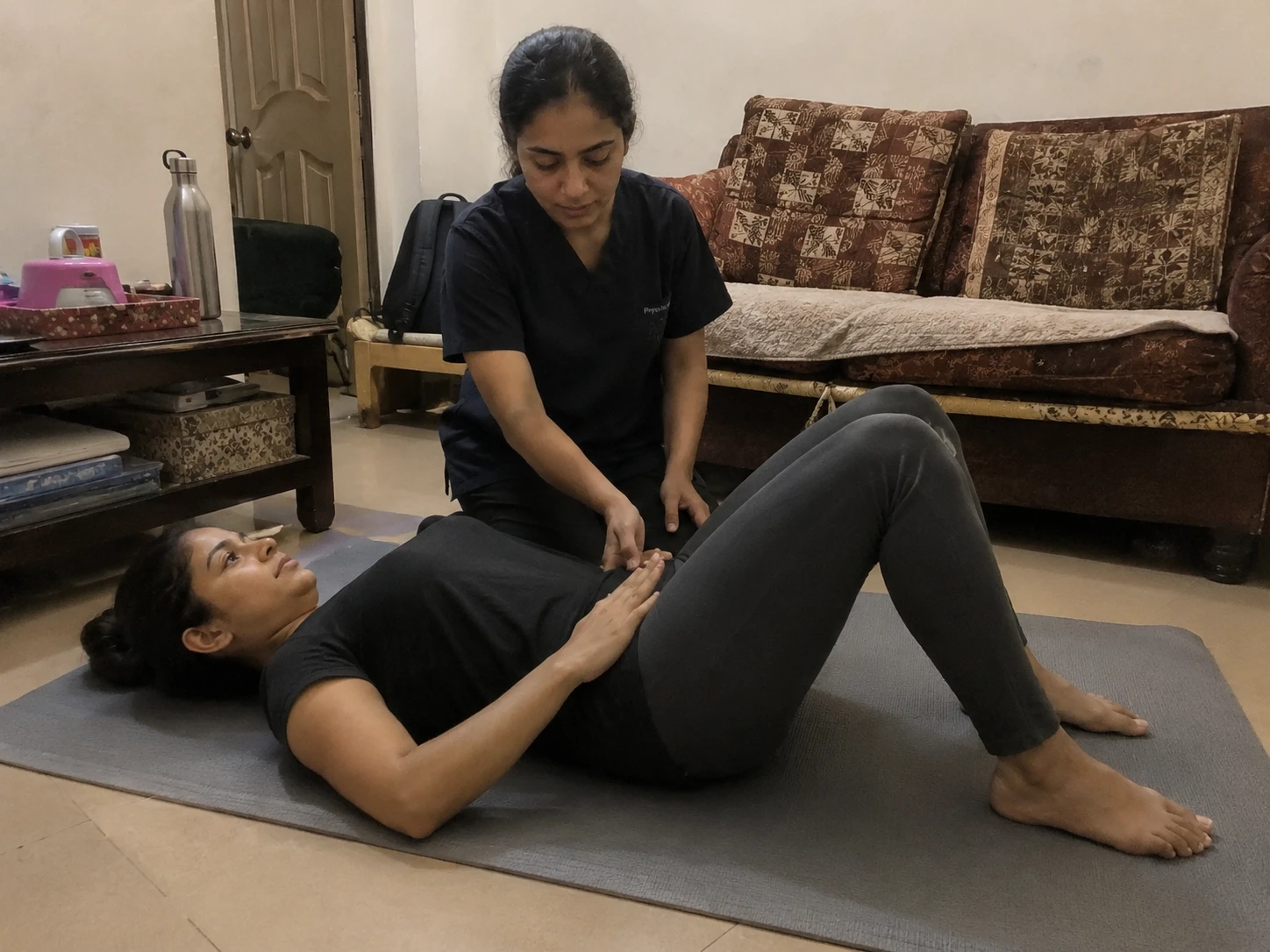
Not all physiotherapy for disc herniation is the same. The approach changes depending on your stage of recovery, which nerve is involved, and what your daily life actually requires. In the acute phase - the first one to three weeks - the priority is pain relief, finding positions that reduce nerve tension, and very gentle movement to prevent the stiffening that comes from fear-driven immobility. McKenzie-style directional preference exercises (often extension-based for lumbar disc herniations) can dramatically reduce referred leg pain within days in the right patient. But the same exercise given to the wrong patient at the wrong time can flare symptoms. This is why individualized assessment matters.
As pain settles, the focus shifts to rebuilding what the disc problem has disrupted: core stability, hip strength, and controlled loading of the spine. This is not 'do 50 crunches.' It's deep transversus abdominis activation, glute strengthening, and gradual progression of loading that teaches the spine to move confidently again. Education is woven through every session - understanding why certain positions aggravate symptoms, how long recovery realistically takes, and what 'normal' soreness during rehab looks like versus a genuine flare. A physiotherapist also works on practical re-training: how to get out of bed with minimal spinal flexion, how to lift from the hips, how to sit in a way that reduces nerve tension during those unavoidable 9-hour work shifts.
Exercise Therapy: How Movement Reduces Pain Instead of Damaging the Disc
One of the most damaging things a person with a herniated disc can do is stop moving entirely and wait for the pain to go away. Total rest leads to muscle wasting, stiffness, and central sensitization - the nervous system becomes even more reactive to pain signals because it's been given nothing but rest and fear. The disc is not made of glass. Controlled, progressive movement is part of what allows it to receive nutrition and repair.
A March 2025 meta-analysis published in Frontiers in Medicine - covering 611 patients across eight randomised controlled trials - found that exercise therapy significantly improved pain scores (VAS), disability (Oswestry Disability Index), range of motion, and quality of life in lumbar disc herniation compared to control groups. The incidence of LDH is rising specifically due to long-term sitting and reduced physical activity during work, making exercise not just rehabilitative but preventive. A 2025 systematic review in Acta Neurologica Belgica covering studies from 2018 to 2023 reached the same conclusion: exercise therapy is effective for reducing pain and improving function in lumbar disc herniation. The type of exercise matters less than the fact of doing it consistently and progressively under guidance.
The physiotherapy goal isn't to protect the spine from all movement. It's to restore confident, loaded movement that supports your real life - getting off the floor after namaz, carrying groceries, getting in and out of a rickshaw, surviving an 8-hour shift at a desk. Movement is medicine when it's the right movement, at the right intensity, at the right time.
What to Expect from At-Home Physiotherapy in Karachi
One of the biggest practical barriers to rehabilitation in Karachi is getting to a clinic when every road trip is a spinal insult. Sitting in a rickshaw for 45 minutes to reach a physio who then makes you lie on a plinth for 20 minutes isn't always the most therapeutic transaction. At-home physiotherapy solves several of these problems at once: no commute through traffic, treatment in the actual environment you live and work in, and a therapist who can see your workspace, your mattress, your prayer mat setup, and your kitchen counter height.
A typical home session for herniated disc begins with a reassessment of symptoms, followed by hands-on techniques where indicated - gentle mobilisation, neural tension techniques, soft tissue work. The PT then teaches safe movement patterns specific to your setup: how to get off a low charpai, how to manage wudhu when forward bending is painful, how to modify bucket shower postures, how to position yourself during sitting namaz if floor sitting is currently too painful. Exercise is demonstrated and practised in the actual space you have - which in a Karachi flat often means a 3x4 foot clearing between furniture.
If you're managing back pain and disc issues at home in Karachi, the practical advice a PT gives in your own space is worth considerably more than generic exercise sheets.
Sessions typically run 45–60 minutes and are spaced progressively - often twice a week in the acute phase, dropping to once a week as you become more independent with the exercise programme. Most patients doing proper structured rehab see meaningful improvement within four to six weeks. Not complete resolution - but enough that fear of movement reduces, leg pain starts to centralise (travel shorter distances), and function returns.
When to Consider Injections or Surgery
Conservative management works for most people. But not everyone. If radicular pain remains severe after six to eight weeks of properly structured physiotherapy, a lumbar epidural steroid injection can reduce nerve root inflammation enough to allow rehabilitation to proceed. It's a tool to create a pain window, not a cure. A A 2025 systematic review examining surgical versus conservative management found that early surgery in patients with worsening neurological deficits was associated with superior motor recovery - but that for most patients without progressive deficit, early surgery didn't outperform well-done conservative care at one-year follow-up.
Microdiscectomy - the standard surgery for lumbar disc herniation - is a relatively minor spinal procedure by surgical standards, and recovery is faster than many patients expect. It's indicated when: radicular pain is intractable despite adequate conservative care; neurological deficits (weakness, reflex loss) are progressing; function is severely limited despite best efforts; or cauda equina syndrome is present as an emergency. Surgery is not a failure of physio. It is the appropriate next step for a specific subset of patients where conservative care has genuinely been given a proper trial and hasn't been enough.
The important thing to avoid is rushing to surgery out of fear before conservative care has had time to work, and equally, staying too long in a conservative management loop while neurological deficits are progressing. A doctor consultation at home can help coordinate this - providing a clinical assessment that determines whether you've reached the point where a spine specialist referral or imaging is the logical next step.
Everyday Habits That Either Help or Hurt
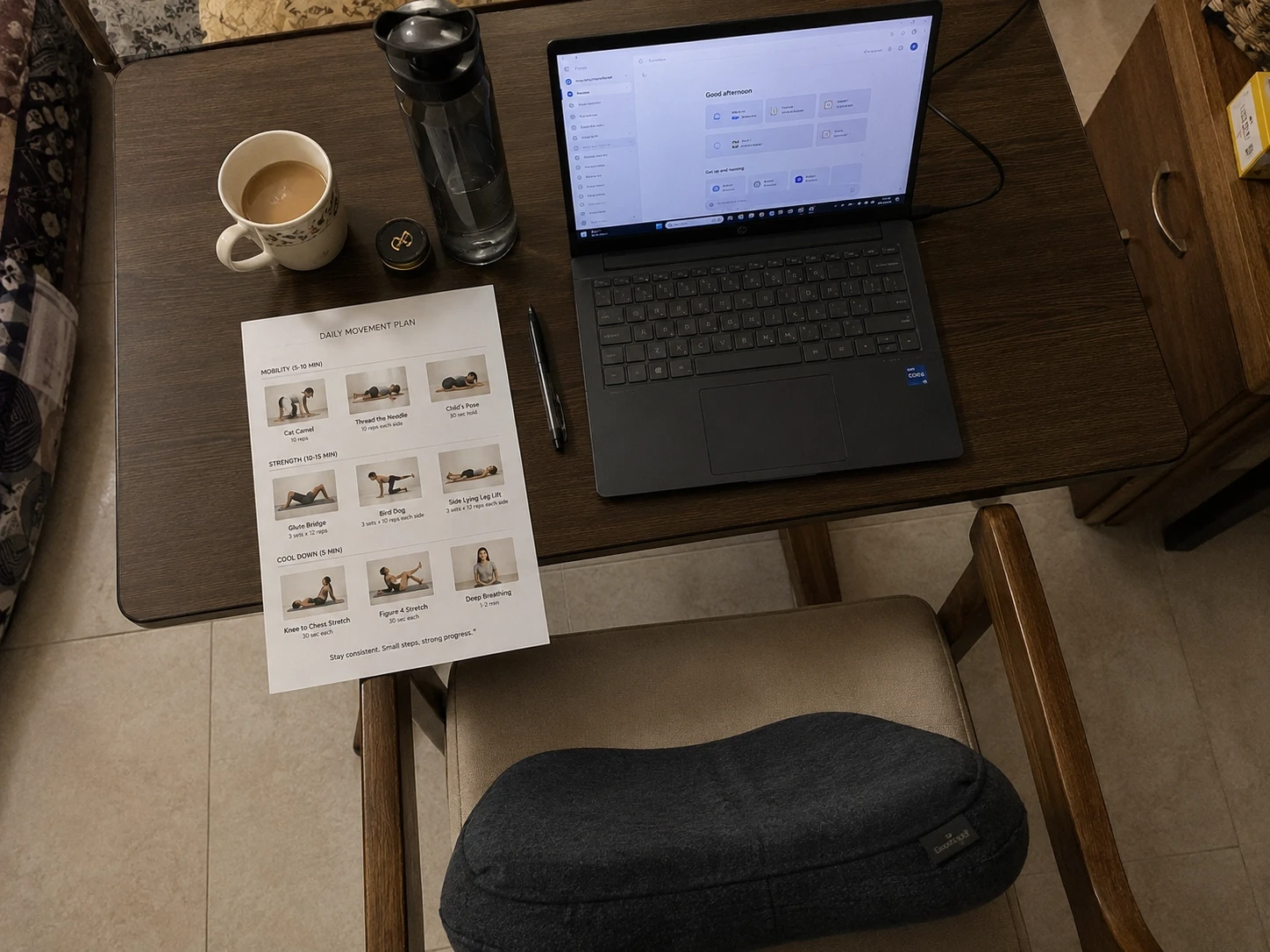
You don't need to rebuild your life around your disc. But a few specific daily habits have a disproportionate effect on recovery speed. Some of these are small. All of them are practical for Karachi life.
Break sitting into blocks. Stand or walk for 2–3 minutes every 30–40 minutes instead of sitting for three or four hours without moving. A brief walk to the kitchen, a minute of gentle standing, anything. This one change alone reduces sustained disc compression and prevents the nerve-irritating stiffness that builds up in long sitting sessions. If you're reading this while sitting at a desk, stand up now.
Lift with your hips and knees, not your back. When picking up a water canister, a child, or groceries, bend at the hips and knees - keep your spine neutral instead of rounding forward. Bending from the waist while loading the spine is one of the most reliable ways to aggravate a disc herniation. It's not about being rigid; it's about where the movement comes from.
Use a rolled towel for lumbar support. A rolled-up hand towel placed at the small of your back in a chair - or in the rickshaw - maintains lumbar lordosis and reduces posterior disc pressure significantly. It costs nothing and works.
Respect the 24-hour rule. If you do an activity today and wake up with significantly worse pain tomorrow, the load was too much. Reduce it, don't abandon it. The goal is progressive loading, not avoidance.
Avoid relying only on painkillers and bed rest as your primary strategy. Analgesics have a role in breaking the pain cycle, but two weeks of near-total bed rest leads to muscle wasting, stiffness, and a nervous system that becomes more sensitized to pain - not less.
Sleeping position matters. Side-lying with a pillow between your knees reduces nerve tension at the disc level. Sleeping on your stomach with the lumbar spine extended is almost universally bad for a herniation. If you're on an old, sagging mattress, a firm yoga mat on the floor is legitimately better than a mattress that lets your spine sag into flexion all night.
Desk and screen height matter more than you think. Tech neck and prolonged desk posture affect the whole kinetic chain - including the lumbar spine. Stack books under your monitor, adjust your chair, and reduce the forward slump that loads L4-L5 and L5-S1 hour after hour.
Clinical FAQs
1. How do I know if my back and leg pain is from a herniated disc or just a muscle strain?
Muscle strain causes bilateral, aching, central back pain without leg symptoms, and typically improves within a week with movement. A herniated disc with nerve root involvement causes one-sided electric or burning leg pain, often past the knee, worsened by coughing or bending. If leg pain is dominant or there's numbness or weakness in the leg, see a physiotherapist or doctor for a proper clinical assessment.
2. Can a herniated disc heal without surgery?
Yes - more than 85% of people with acute lumbar disc herniation and leg pain improve significantly with conservative care, and spontaneous reabsorption of herniated material occurs in over half of cases managed non-surgically. Structured physiotherapy, appropriate pain management, and time are the first-line approach for most patients. Surgery is reserved for cases that fail to improve or where neurological deficits are progressing.
3. How long does it usually take to feel better with physiotherapy for a herniated disc?
Most patients see meaningful improvement in four to eight weeks of structured physiotherapy. Leg pain often starts to centralise - travel a shorter distance - before it disappears entirely. Full functional recovery can take three to six months in moderate cases. If pain is not improving at all after six weeks of proper treatment, or neurological symptoms are worsening, reassessment and possible imaging are warranted.
4. Is it safe to exercise with a herniated disc, or will I damage my spine more?
Controlled, guided exercise is not only safe - it is part of treatment. A 2025 meta-analysis in Frontiers in Medicine confirmed exercise therapy significantly improves pain, disability, and quality of life in lumbar disc herniation. The key word is guided: a physiotherapist identifies which movements are helpful and which are harmful for your specific level and severity. Avoid total rest.
5. When should I get an MRI if I suspect a herniated disc?
MRI is not recommended on day one unless red flags are present. Current guidelines advise that imaging is not indicated without red flags until symptoms have persisted for six weeks despite conservative management. Get an MRI immediately if you have any signs of cauda equina syndrome (bladder/bowel changes, saddle numbness, bilateral leg weakness). For everyone else, a clinical assessment comes first - and saves you the cost of an urgent scan.
6. What are the warning signs of cauda equina syndrome that need emergency hospital care?
Go to A&E immediately if you develop: new difficulty urinating or sudden incontinence; numbness in the groin, inner thighs, or genitals (saddle area); rapidly worsening weakness in both legs; or electric pain running down both legs simultaneously. Updated 2025 national guidance confirms that even suspected CES symptoms mandate emergency referral without waiting for objective signs. This is a time-critical surgical emergency.
7. Can I keep working with a herniated disc, or do I need complete bed rest?
Complete bed rest is not recommended and actually slows recovery. Staying active within your pain tolerance is better. If you have a desk job, modify your workstation, break up sitting time, and use a lumbar support. If your job involves heavy lifting, temporary light duties are reasonable while in the acute phase. If you're managing prolonged sitting and disc-related back pain, small ergonomic changes at work have a meaningful effect on recovery speed.
The Bottom Line
A herniated disc is not a life sentence. Most people recover with proper conservative care, return to full activity, and never need surgery. But the two things that reliably make outcomes worse are: waiting too long before getting a proper clinical assessment (hoping it will go away while neurological symptoms quietly progress), and the opposite - rushing to surgery out of fear before giving structured rehabilitation a real chance.
A home visit from a Sehat Door physiotherapist or doctor means your assessment, your exercise plan, and your practical modifications happen in your actual environment - not a clinic that assumes you have an ergonomic chair, a gym, and an easy commute. Karachi physiotherapy at home for sciatica and disc issues is not a luxury option; for many patients dealing with disc herniation, it's the most efficient path to recovery.
The one thing you should never do is ignore progressive leg weakness, new bladder or bowel symptoms, or pain that keeps getting significantly worse despite conservative care. Those are the signals that require medical assessment - not a web search, not another week of painkillers, and not this article. Getting those symptoms evaluated urgently is not overreacting. It is exactly what the evidence supports.
Disclaimer: This article provides general health information only and does not constitute a diagnosis or treatment plan. Always consult a qualified physiotherapist or physician for your specific condition.

Dr. Aleena PT
A Physiotherapy Doctor (DPT) from Jinnah Sindh Medical University, focused on musculoskeletal rehabilitation, evidence-based patient care, pain management, mobility improvement, and recovery support.