Screen-Time Insomnia: How Blue Light & Cognitive Overload Are Destroying Your Sleep
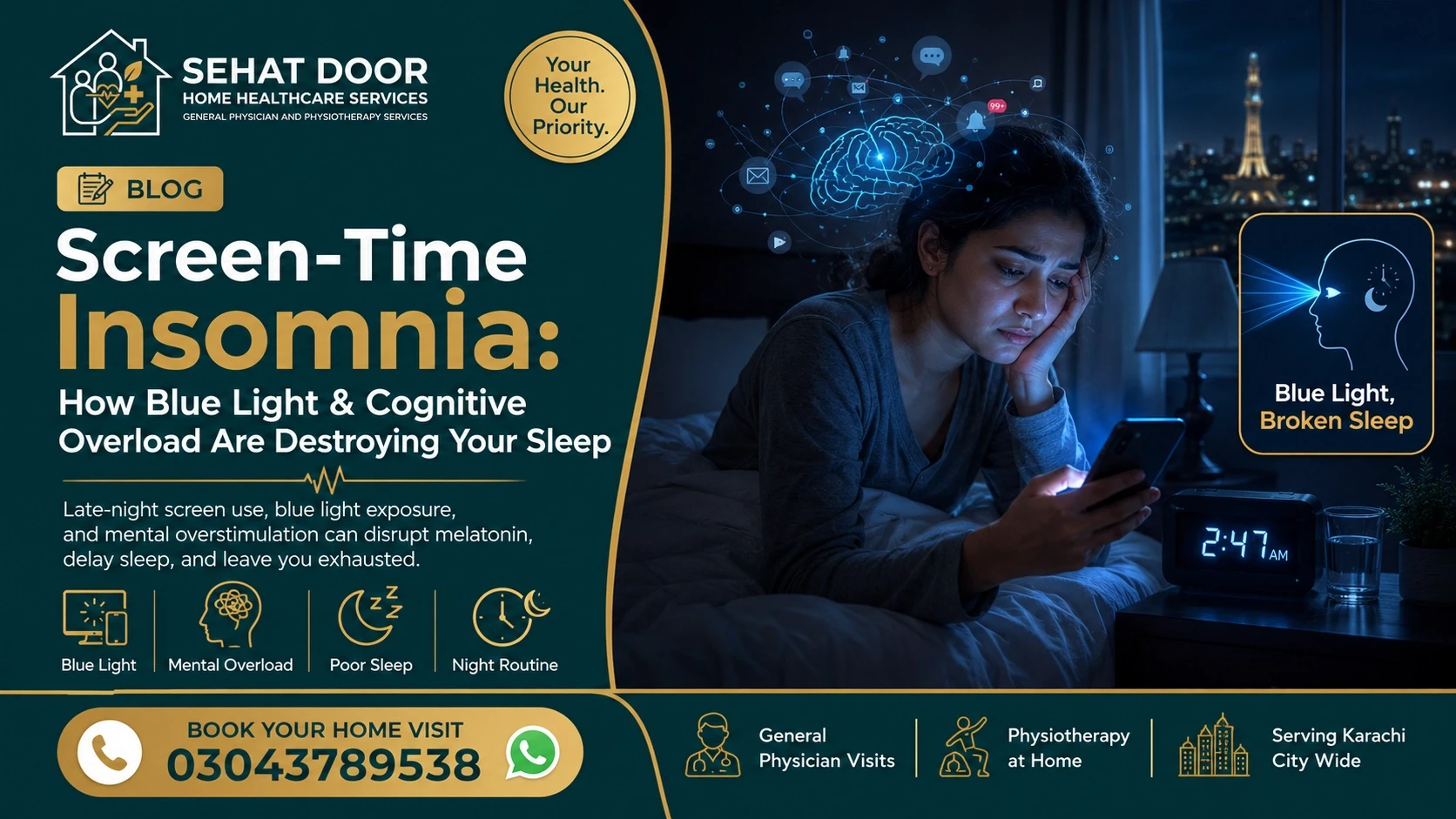
Quick Answer - "Why can't I sleep after working late on my computer?" Blue light from screens chemically blocks melatonin production in your pineal gland. Late-night cognitive work - stressful emails, code, deadlines - simultaneously triggers a cortisol and adrenaline surge that keeps your sympathetic nervous system locked in fight-or-flight. Sleep becomes physiologically impossible. This is not a willpower problem. It is an acute neurological crisis.
You have been exhausted since 2 PM. Your eyes are dry and burning. Your shoulders have been locked around your ears since 7 PM. The deadline is done. You close the laptop. You lie down.
Nothing happens.
The brain that felt like dissolving static for six hours is now generating thoughts at machine-gun speed. Your heartbeat is audible in a silent room. That ceiling is becoming very familiar. As a GP in Karachi, I see the consequences of this exact scenario every week - elevated blood pressure in 29-year-old developers, pre-diabetic markers in students who swear they eat well, chronic fatigue in remote workers who cannot understand why eight hours in bed leaves them feeling like they were hit by a bus.
This is not bad luck. This is documented neurological chemistry. A 2014 study published in the Proceedings of the National Academy of Sciences found that evening exposure to light-emitting screens delayed melatonin onset by 1.5 hours and reduced melatonin levels by approximately 55% compared to reading a printed book under dim light. That is not a minor disruption. That is a complete chemical override of your brain’s sleep signal. And research from Harvard Medical School confirms that blue light specifically suppresses melatonin for roughly twice as long as equivalent green light - making the LED screen glowing on your desk at midnight one of the most potent anti-sleep tools ever engineered.
I am not talking about feeling groggy. I am talking about a systematic destruction of your sleep architecture - the REM cycles that consolidate memory, regulate cortisol, and protect your cardiovascular system. The patients who come to me are not lazy. They are IT professionals, remote workers, and final-year students who have, through sheer force of modern work habit, rewired their own neurobiology.
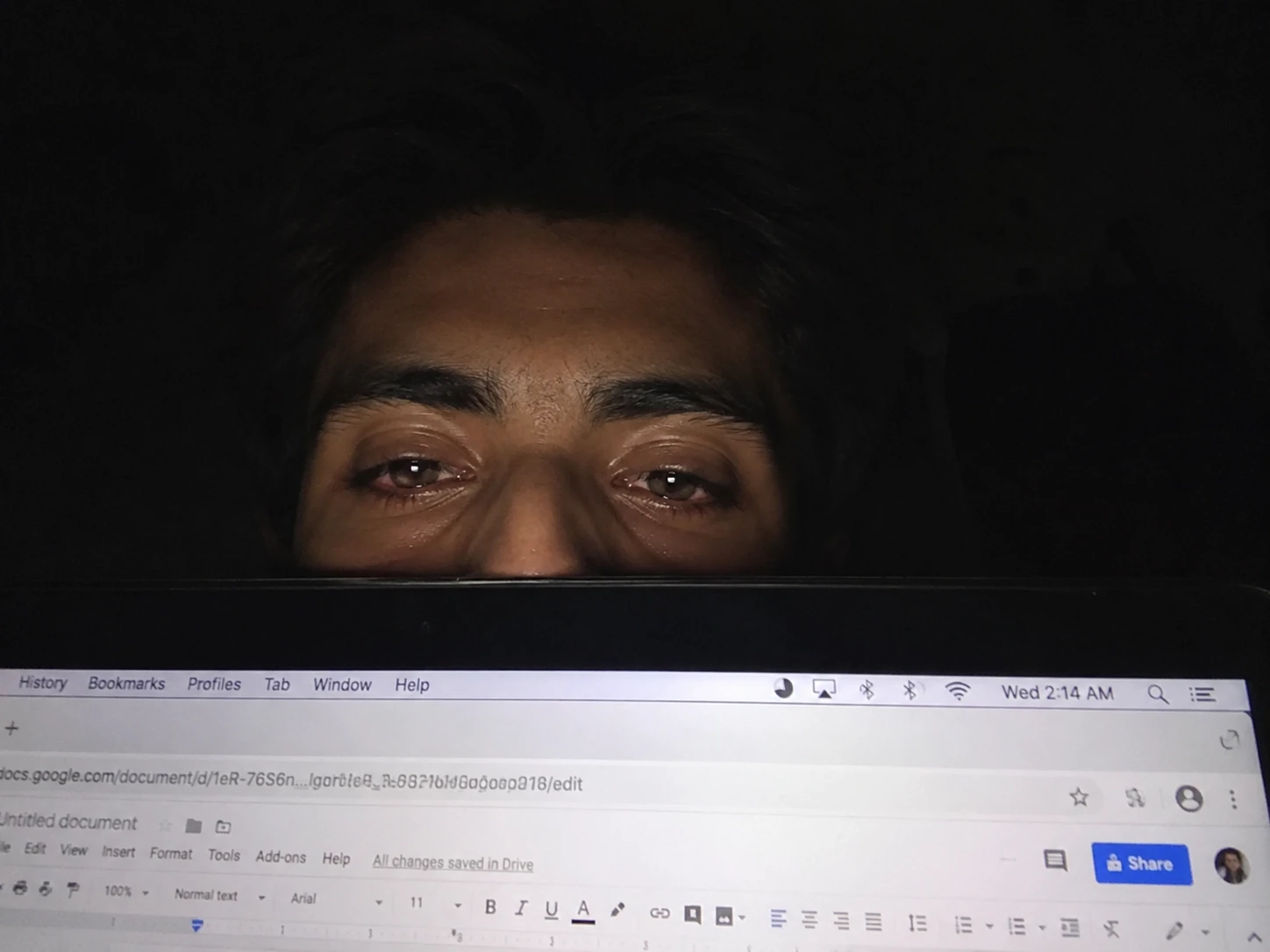
The Damage at a Glance
What you believe is harmless wind-down habit. What is actually happening in your brain chemistry.
Late-Night Habit | Neurological Reality | Clinical Consequence |
"Just one more email" before bed | Stress-inducing messages spike cortisol, which has a biological half-life of 60–90 minutes in the bloodstream. Physiological relaxation is chemically impossible for at least an hour after you close the app - regardless of how calm you feel subjectively. | Delayed sleep onset 45–90 minutes; fragmented first sleep cycle; elevated next-day anxiety baseline. |
Staring at a bright LED monitor at midnight | Blue light in the 446–477 nm range suppresses melatonin by up to 55–71%, signalling the pineal gland that it is 2 PM. Screen brightness alone - independent of spectral content - further elevates alertness via the arousal system. | REM latency increases by up to 1.5 hours; total REM duration decreases by up to 25% in the first sleep cycle; morning alertness measurably impaired. |
Doomscrolling in the dark | Maximally dilated pupils in a dark room absorb blue light with near-zero ambient filtering. The dopamine-reward cycles of social media feeds keep limbic circuits firing. This is the worst possible combination of inputs for your circadian clock. | Circadian phase delay of 1–3 hours; accumulating sleep debt; progressive shift toward metabolic dysfunction over weeks. |
How Blue Light & Cognitive Overload Are Destroying Your Sleep
The reason you can’t sleep after a late-night screen session is not one problem - it's two completely separate biological attacks happening at the same time. Blue light chemically shuts down your brain’s sleep signal. Cognitive overload locks your nervous system into a state of emergency alertness. Together, they make sleep physiologically impossible. Here is exactly what each one does to your brain.
Blue Light: What It Is and Why It Blocks Sleep
Blue light is a short-wavelength, high-energy portion of the visible light spectrum - concentrated between 400–490 nanometres. Natural sunlight contains it. So does every LED screen you own. During the day, this is useful. Your brain reads blue light as a signal to stay alert and suppress drowsiness. The problem starts when that same light hits your eyes at 11 PM.
Deep in your brain sits the pineal gland - a structure roughly the size of a grain of rice whose entire job is to release melatonin when it detects darkness. It gets its signal from a specific type of cell in your retina called photosensitive retinal ganglion cells (ipRGCs). These cells are maximally sensitive to blue-wavelength light. When your laptop or phone screen fires blue photons into your eyes at midnight, your ipRGCs relay one unambiguous message to the pineal gland: it is the middle of the day - stop producing melatonin. The gland complies immediately.
A 2011 study published in the Journal of Clinical Endocrinology & Metabolism found that evening light exposure suppresses melatonin production by up to 71% and delays melatonin onset by nearly 90 minutes. Research highlighted by Harvard Medical School further confirms that blue light specifically suppresses melatonin for roughly twice as long as other wavelengths. Without melatonin, your body has no chemical signal to transition into sleep. You are exhausted and neurologically wide awake at the same time. That is not irony. That is biology.
Blue Light's Three Specific Effects on Your Sleep Architecture
Delays sleep onset by 90 minutes or more. Melatonin does not just help you feel sleepy - it initiates the cascade of physiological changes required for sleep: core body temperature drop, heart rate reduction, and cortical deactivation. When its production is suppressed, none of that cascade begins on schedule. According to a 2014 study in the Proceedings of the National Academy of Sciences, participants using light-emitting screens before bed had melatonin onset delayed by 1.5 hours compared to those reading printed books.
Reduces total REM sleep duration by up to 25%. Because sleep onset is pushed back, the brain gets fewer full 90-minute sleep cycles before waking time. REM sleep - the phase responsible for memory consolidation, emotional regulation, and cognitive restoration - is heaviest in the later cycles. Shorter total sleep time directly amputates the sleep stages your brain needs most.
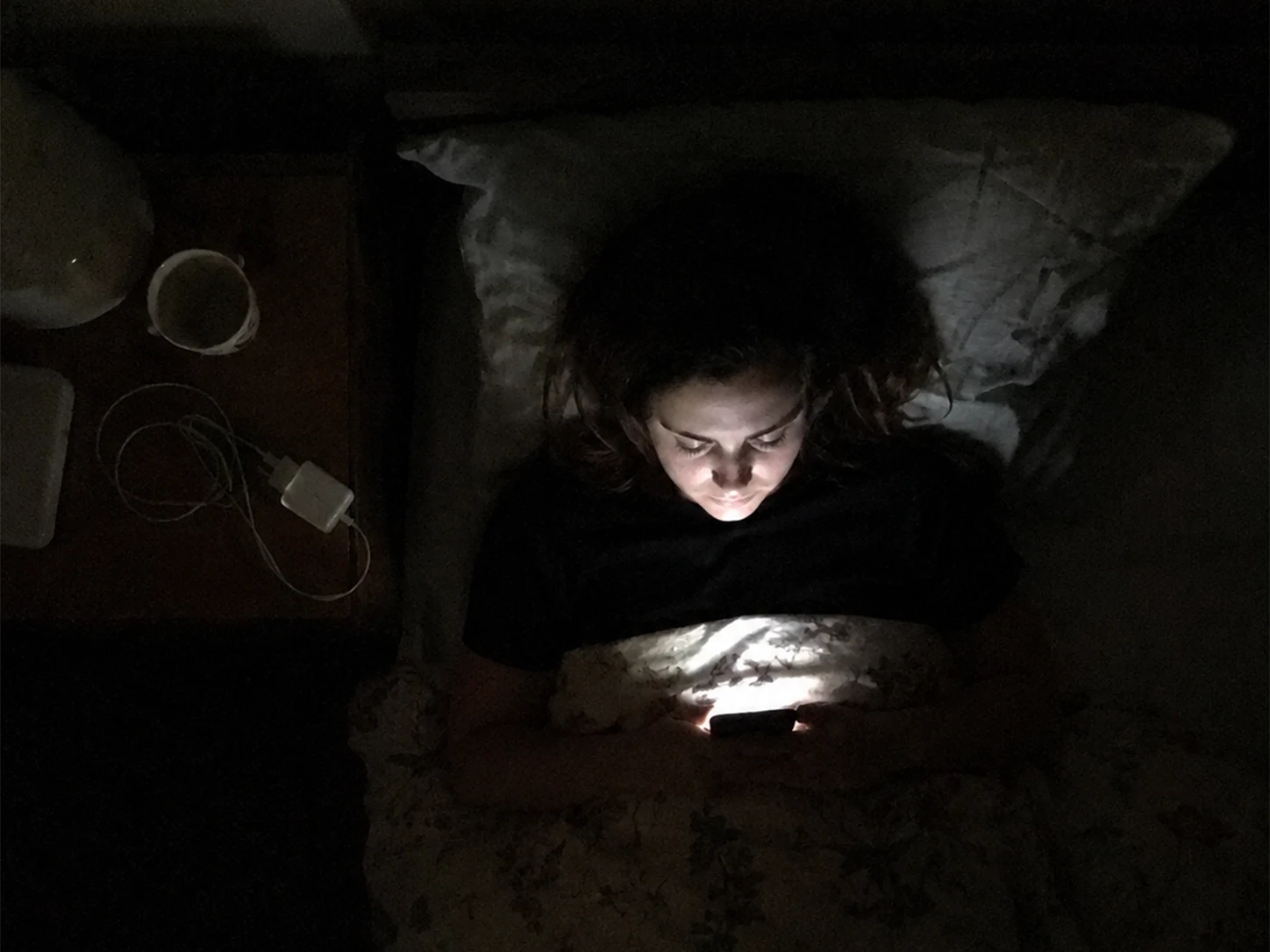
Doomscrolling in the dark is the worst version of this. In a dark room, your pupils are maximally dilated. Blue light from your screen enters the eye with virtually no ambient filtering. Your ipRGCs absorb it at full intensity. The content itself - reactive social media, alarming news, emotionally provocative videos - simultaneously activates the dopamine reward circuit. You get both a photochemical melatonin block and a neurochemical stimulant hit at the same time.
Cognitive Overload: Why a Busy Brain Cannot Switch Off
Even if you turned off every screen an hour before bed, late-night cognitive work would still be destroying your sleep. This is the part that almost never appears in popular advice - and it explains why people who “try” to wind down after work often still lie awake for hours.
When your brain is engaged in cognitively demanding or emotionally stressful activity - processing a difficult client message, underperforming on an exam, reviewing financial details, solving a complex problem - your hypothalamus does not distinguish this from physical danger. Cognitive threat activates the same sympathetic nervous system response as physical threat. The result is identical: cortisol and adrenaline flood your bloodstream. Heart rate climbs. Blood pressure rises. Peripheral blood vessels constrict. Your brain enters a state of heightened vigilance specifically designed to prevent sleep.
Cortisol has a biological half-life of 60-90 minutes in the bloodstream. That is not negotiable. Closing the laptop does not immediately end the stress response - the chemistry is already in circulation. This is the direct reason an IT professional who finishes work at midnight is often still staring at the ceiling at 2 AM. The work is done. The cortisol is not. If you are already carrying the metabolic load of a sedentary career, that nightly cortisol surge compounds the damage further - as we detailed in our piece on how 8-hour desk jobs are spiking cholesterol in Karachi professionals.
Cognitive Overload's Three Specific Effects on Your Sleep
Cortisol spike before bed delays sleep onset and fragments early sleep cycles. Elevated cortisol suppresses the activity of the sleep-promoting hypothalamic systems and keeps the arousal system dominant. Even when you do eventually fall asleep, the first sleep cycles are lighter and more fragmented than they should be. You wake more easily. You stay in light sleep stages longer. The deep restoration of slow-wave sleep is cut short.
The "second wind" is not energy - it is an emergency stress response. When sleep pressure builds past a critical threshold and is continually overridden by cortisol, your body interprets prolonged wakefulness as a survival situation and releases a secondary adrenaline surge. You feel suddenly alert at 1 AM. Your focus briefly sharpens. This is your stress system masking dangerous sleep deprivation with stimulant neurochemistry - not your body recovering. In Karachi’s late-night context - load-shedding shutting off the AC, scrolling reels in the dark while waiting for the generator, settling back in front of a screen after midnight - this second wind becomes a nightly routine. Compound it with the extreme heat conditions Karachi faces each summer, and you have an environment where both thermal and neurological conditions are actively preventing sleep.
Chronic late-night cognitive overload decouples your circadian rhythm entirely. The Sleep Foundation's clinical documentation on circadian disruption confirms that persistent late-night arousal - whether from light or stress - shifts the body’s master clock (the suprachiasmatic nucleus) by 30–60 minutes per week. Within three months, your biological clock may be running 2–4 hours behind your social schedule. The downstream consequences are not just sleepiness: insulin resistance, elevated inflammatory markers, impaired immune response, and measurably higher cardiovascular risk. And if those years of late-night screen work have also bent your neck forward for eight hours a day, the physical toll compounds everything - read our breakdown of how tech neck and screen posture are silently damaging desk workers in Karachi.
The Sleep Hygiene Lies: Why Standard Advice Fails Tech Workers
Blue-light blocking glasses are a revenue-generating accessory that addresses approximately 10–15% of the problem. Screen brightness alone - independent of spectral content - activates the arousal system. Melanopsin suppression occurs through multiple photoreceptor pathways. Putting on amber-tinted glasses while spending two hours processing threatening work messages at midnight treats the symptom at a fraction of effectiveness while leaving the cortisol spike entirely untouched. They are not a clinical intervention.
Turning on Night Shift while aggressively responding to stressful client emails at 11 PM is pharmacologically incoherent. Your retinas are fractionally protected. Your hypothalamus-pituitary-adrenal axis is running at full capacity. You are chemically incapable of sleeping - and the aesthetic warmth of an orange screen is doing nothing about that.
Over-the-counter antihistamines (diphenhydramine) induce sedation through histamine receptor blockade. This is not sleep. Deep sleep architecture is disrupted. REM is suppressed. You will wake up with a brain fog patients consistently describe as worse than no sleep at all. The clinical term is residual sedation. It will destroy your next morning.
Alcohol as a sleep aid still surprises people. A nightcap reduces sleep latency because alcohol is a CNS depressant. But alcohol is metabolised at roughly 0.015% BAC per hour. As it clears in the early morning hours, it triggers a rebound autonomic response - elevated cortisol, fragmented light sleep, early morning waking. You fell asleep faster. You will not stay asleep.
Lying awake in bed for more than 20 minutes is not passive. Your brain is a Hebbian associative machine. Every night you lie in bed in a state of hyperarousal, you are strengthening the direct neural association between your mattress and anxiety. This is the exact mechanism behind psychophysiological insomnia - and it is why insomnia treatment at home by a qualified physician needs to begin before that association becomes entrenched. Once it is wired in, it requires structured cognitive behavioural intervention to reverse.
Frequently Asked Questions
What is screen-time insomnia?
Screen-time insomnia is a clinically recognised pattern of sleep disruption caused by two concurrent mechanisms: blue light emitted by LED screens suppressing melatonin production in the pineal gland, and the cognitive demands of late-night digital activity keeping the sympathetic nervous system in a state of arousal. Unlike stress-related insomnia, screen-time insomnia is driven by measurable neurochemical interference - not psychological anxiety alone. It is increasingly prevalent among IT professionals, remote workers, and students whose working hours extend into the late night.
What is blue light melatonin suppression?
Blue light melatonin suppression is the process by which short-wavelength blue light - primarily in the 446–477 nm range - activates photosensitive retinal ganglion cells (ipRGCs) in the eye, which relay a signal to the suprachiasmatic nucleus to halt melatonin synthesis in the pineal gland.
What is cognitive overload insomnia?
Cognitive overload insomnia refers to sleep disruption caused by the sympathetic nervous system remaining in a state of hyperarousal following mentally demanding or emotionally stressful late-night tasks - such as processing work emails, managing deadlines, or problem-solving under pressure. The hypothalamus interprets cognitive threat identically to physical threat, triggering a cortisol and adrenaline cascade. With cortisol having a biological half-life of 60–90 minutes, the stress neurochemistry remains physiologically active long after the screen is closed, making sleep onset biologically impossible during that window.
What is circadian rhythm decoupling?
Circadian rhythm decoupling - also called circadian phase delay - occurs when chronic exposure to artificial light at night causes the brain’s master clock (the suprachiasmatic nucleus in the hypothalamus) to shift the body’s internal sleep-wake cycle progressively later. Consistent late-night screen use can delay the biological clock by 30–60 minutes per week.
What is psychophysiological insomnia?
Psychophysiological insomnia is a conditioned arousal disorder in which the brain develops a learned association between the bed and the physiological state of wakefulness and anxiety. It develops through a Hebbian conditioning mechanism: repeated nights of lying awake in a state of sympathetic arousal in the same physical environment gradually wire the bed itself as a trigger for hyperarousal. This is why screen-time insomnia, if left unaddressed, frequently transitions into a persistent clinical condition - the original cause (screens) is compounded by a secondary neurological pattern that persists even after screen use is corrected.
What is REM sleep latency and how do screens affect it?
REM (Rapid Eye Movement) sleep latency is the time elapsed between falling asleep and entering the first REM stage - the phase critical for emotional regulation, memory consolidation, and cognitive restoration. Normal REM latency is approximately 70–90 minutes after sleep onset.
What is the glymphatic system and why does poor sleep damage it?
The glymphatic system is a brain-wide waste clearance network that flushes metabolic byproducts - including amyloid-beta and tau proteins - from neural tissue during sleep, particularly during slow-wave (deep) sleep. It functions primarily through the expansion of perivascular spaces when sleep-related neuronal activity slows. Chronic sleep deprivation and fragmented slow-wave sleep impair glymphatic clearance, leading to accumulation of neurotoxic waste. This is the mechanism by which years of poor sleep are linked - in multiple NIH-supported studies - to accelerated cognitive decline and elevated Alzheimer’s disease risk.
Final Words
Most of the patients I see in my Karachi clinic have been running on four to five hours of fragmented sleep for two or three years. They present for something else. Elevated blood pressure. Unexplained weight gain. Persistent resting tachycardia. Pre-diabetic glucose markers. Every single time, when I ask about sleep, the answer is the same: "I don't sleep well, but that can’t be connected."
It is always connected.
The cardiovascular consequences of chronic sleep deprivation - sustained sympathetic nervous system activation, endothelial inflammation, cortisol-driven hypertension - are not hypothetical future risks. They are clinical realities I document in patient charts every week. Your body does not distinguish between a missed deadline and a physical threat. Both trigger the same chemical cascade. Right now, in this city, millions of people are running that cascade every night - staring at a screen, then staring at a ceiling, wondering why the exhaustion never clears.
The answer is sitting on your desk, plugged into a charger.
DISCLAIMER: This article is for preventative educational purposes only and does not constitute individual medical advice. If you are experiencing persistent insomnia or related symptoms, consult a qualified physician for appropriate evaluation and treatment.

Dr. Munazza
A General Physician (MBBS) with 5+ years of experience, currently working as an RMO at Saifee Hospital, focused on diagnosing, treating, and managing common health conditions.